
How to create content that performs across traditional search, AI search and AI assistants
By Jon Earnshaw|06 Aug 2026|9 min read
For years, content strategy was built around a familiar objective: create content that ranks.
We researched keywords, understood search intent, created optimized pages and measured success through rankings, traffic and conversions. Those fundamentals still matter, but they're no longer enough.
Today, people discover information across traditional search, AI search engines, videos and social platforms, increasingly relying on AI assistants and agents to research, compare options and make decisions. Behind the scenes, these systems are doing far more than retrieving webpages. They're interpreting information, evaluating expertise and recommending solutions.
The challenge is no longer simply creating content that can be found. It's creating content that can be understood, trusted and recommended wherever people search.
At Pi Datametrics, this shift has fundamentally changed the way we think about creating content. In this guide, I'll share the practical framework we use to build content that performs across traditional search, AI search and AI assistants.
The Interpretation Stack: a framework for creating content that performs
Search has evolved from retrieving webpages to interpreting information. As search engines, AI systems and AI assistants become increasingly responsible for discovering, evaluating and recommending content, organisations need a practical way to create information that performs across every stage of that journey.
At Pi Datametrics, we use the Interpretation Stack to help brands create content that can be found, understood, trusted and recommended across traditional search, AI search and AI assistants. Rather than focusing on rankings or individual keywords alone, it asks a broader question:
What information are we giving search engines and AI systems to interpret?
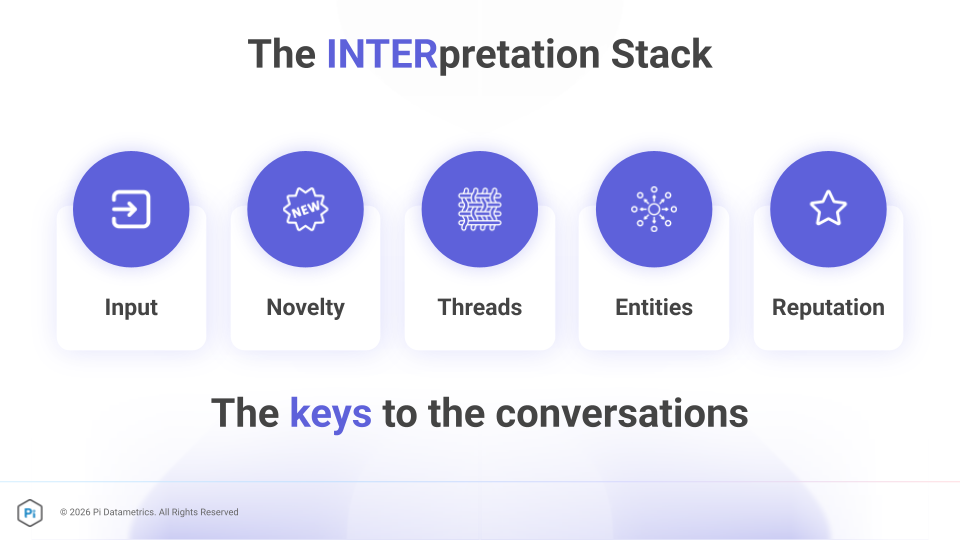
The framework is built around five connected principles:
- Inputs – Create content that provides meaningful information and clear signals.
- Novelty – Contribute something genuinely deep, unique and original.
- Threads – Build content around complete conversations rather than isolated searches.
- Entities – Make it easy to understand who you are, what you do and how your expertise connects together.
- Reputation – Reinforce those signals across the wider digital ecosystem.
My BrightonSEO talk on the Interpretation Stack
In this BrightonSEO talk, I explain why search is moving from retrieval to interpretation and how the Interpretation Stack helps brands create content that can be understood, trusted and recommended across traditional search, AI search and AI assistants.
The Interpretation Stack is also the process we follow at Pi Datametrics when helping enterprise organisations prepare for the future of search. Through our Answer Engine Optimisation (AEO) Services and Agentic AI Services, we help teams assess how their content and wider digital ecosystems are interpreted, identify the gaps that limit visibility and put these principles into practice at scale.
Together, these five principles provide a practical framework for creating content that can be found, understood, trusted and recommended. Let's start with the quality of the inputs we create.
1. Inputs
Create better content with the FAST content framework
Every piece of content you publish becomes an input into the interpretation process.
An article, product page, webinar, video, case study, image, social post or customer review all provide search engines and AI systems with information that helps them understand your expertise, your products and ultimately your brand.
That's why I don't believe a successful content strategy is measured by the amount of content you produce. It's measured by the quality of the signals that content creates.
Publishing more content doesn't automatically create more visibility. If that content adds little value, repeats what's already available or lacks credibility, it simply adds more noise to an already crowded search landscape.
The goal isn't to create more inputs.
It's to create better ones.
Pi's FAST content framework
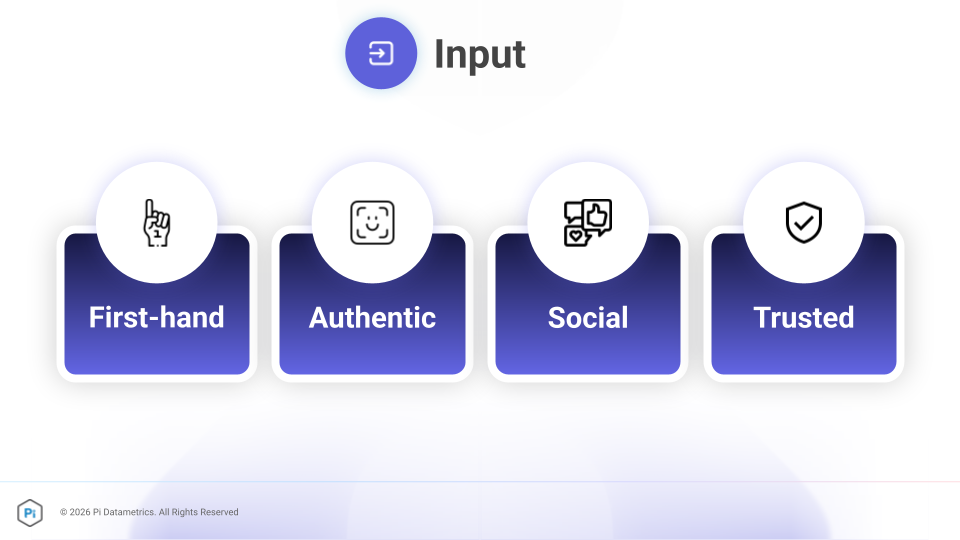
At Pi Datametrics, we use the FAST framework to guide the quality of those inputs. Every piece of content should be:
- Firsthand
- Authentic
- Social
- Trusted
Here I explain FAST Content and DUO content:
Together, these principles help create content that isn't just discoverable, but genuinely valuable to both people and AI systems.
First-hand
The strongest content begins with experience.
One of the biggest opportunities brands have today is creating content that only they can produce. While anyone can summarise information that's already available online, firsthand experience is much harder to replicate.
That experience might come from an expert explaining something they work with every day, a customer sharing how they solved a problem, original research, product demonstrations, real-world testing or lessons learned from years of practical experience. These are the insights that create genuine value because they don't exist anywhere else.
One point I often make is that firsthand content doesn't need to be highly polished.
A simple video of someone using a product and explaining their experience can often be far more valuable than a professionally produced video that says nothing new. Production quality can improve content, but it can't replace originality or expertise.
When planning content, ask yourself:
- What do we know that others don't?
- What experience can only we share?
- What evidence can we provide that doesn't already exist elsewhere?
Those are the foundations of firsthand content.
Authentic
Authentic content has a recognisable point of view.
It reflects the knowledge, experience and language of the people behind the brand rather than sounding like a summary assembled from the same sources everyone else has used.
This becomes increasingly important as AI makes it easier to generate large volumes of content.
AI can accelerate research, improve workflows and support content production, but it doesn't create expertise. That's still the responsibility of the people behind the content.
Every article should answer a simple question:
Why should this have been written by us?
If another organisation could publish exactly the same article without changing a word, it probably isn't contributing anything distinctive.
Authenticity isn't about writing differently for the sake of it.
It's about creating content that genuinely reflects your experience, your methodology and your perspective.
Social
Content shouldn't begin and end with the website.
Every format your organisation publishes becomes another input into the interpretation process, including videos, webinars, podcasts, social content, customer stories, interviews, original research and visual assets. The objective isn't to publish everywhere. It's to choose the formats that best demonstrate your expertise while ensuring they reinforce the same understanding of your brand.
Different formats serve different purposes. A detailed guide can provide depth, a webinar can explore a topic conversationally, and a short video can demonstrate firsthand experience in a way written content cannot. A simple recording of someone using a product, explaining their thinking or answering a customer's question can often provide a stronger signal than an expensive production with no original insight.
AI systems aren't simply looking for more content. They're looking for more evidence. Each format creates another opportunity for search engines, AI systems and AI assistants to understand your expertise, which is why these assets should be treated as a connected ecosystem rather than separate marketing activities.
Trusted
Trust has always been central to search.
It's becoming even more important as AI systems evaluate information from multiple sources before deciding what to recommend.
People naturally ask:
- Who created this?
- Why should I trust them?
Search engines ask similar questions.
That's why E-E-A-T remains fundamental to a modern content strategy.
Experience, Expertise, Authoritativeness and Trust aren't separate initiatives. They're the foundations that support everything else.
Your content should make it clear who wrote it, why they're qualified to write about the topic, what evidence supports their conclusions and when the information was last reviewed. Author pages should demonstrate genuine expertise rather than existing simply because they're considered SEO best practice.
Search engines increasingly validate those signals beyond your own website, looking at speaking engagements, published research, professional experience and wider industry recognition.
FAST doesn't replace E-E-A-T.
It provides a practical way to create the kind of content that naturally demonstrates it.
Better inputs create better outcomes
Creating FAST content is the foundation of a modern content strategy, but quality alone isn't enough.
Your content also needs to contribute something that doesn't already exist.
If every organisation publishes the same advice, uses the same examples and reaches the same conclusions, there's very little reason for search engines or AI systems to distinguish one source from another.
That's why the second principle of the Interpretation Stack is Novelty.
The brands most likely to be remembered, cited and recommended are the ones that contribute something genuinely new to the conversation.
2. Novelty
Create deep, unique and original content
Creating high-quality content is the foundation of a successful content strategy.
Creating content that's worth recommending is what sets exceptional content apart.
Every day, search engines and AI systems process millions of pages covering the same subjects. Many explain the same concepts, use the same examples and reach the same conclusions. When content becomes interchangeable, it becomes increasingly difficult for search engines to distinguish one source from another.
That's why the second principle of the Interpretation Stack is Novelty.
Novelty isn't about chasing trends or publishing controversial opinions. It's about making a genuine contribution to the conversation. Your content should help people understand something they couldn't have understood by reading every other page already available.
This aligns closely with advice shared by Google's Liz Reid. When asked how brands can improve their visibility in AI-powered search, she encouraged publishers to create content that is deeper, more unique and more original.
I couldn't agree more.
Pi's DUO framework
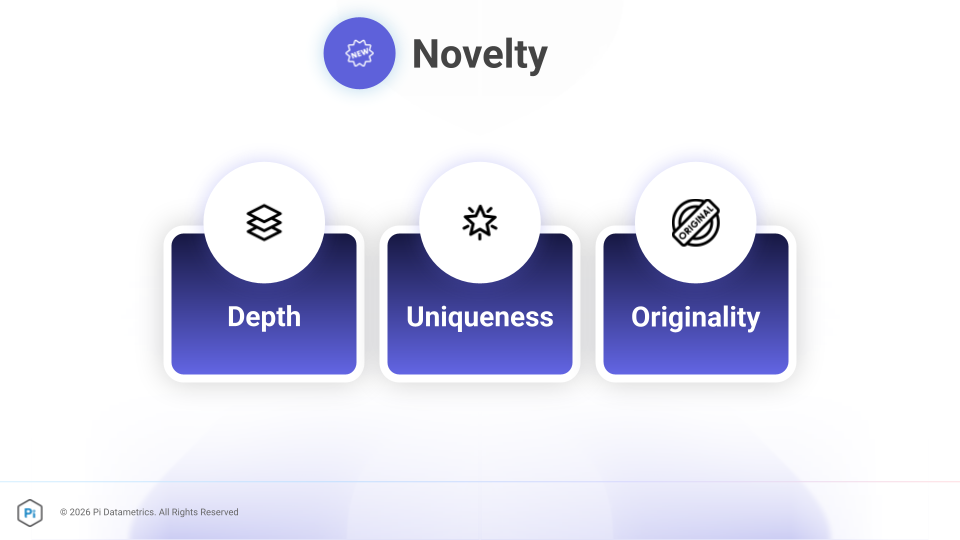
At Pi Datametrics, we describe these principles through the DUO framework. Content should be:
- Deep
- Unique
- Original
Together, these three characteristics create a reason for search engines and AI systems to preserve your perspective rather than replacing it with a generic summary.
Deep
One of the biggest misconceptions about content quality is that depth is measured by word count.
It isn't.
A long article can still be superficial if it simply repeats what everybody else has already said. Truly deep content goes beyond answering the first question. It anticipates what someone will want to know next and continues to add value as their understanding develops.
That might mean explaining the reasoning behind a recommendation, exploring different scenarios, comparing approaches, discussing limitations or providing practical examples that help someone make an informed decision.
When planning content, I often encourage teams to think beyond the search query itself.
- What questions naturally follow?
- What concerns will people have?
- What evidence will they need before they trust your recommendation?
Those follow-up questions are often where the greatest opportunities exist because they're the questions many organisations never answer.
Depth isn't about saying more.
It's about explaining more.
Unique
Creating unique content doesn't mean being different for the sake of it.
It means contributing something that couldn't easily be recreated by someone else.
That contribution might be a proprietary framework, original research, customer insights, a new methodology, first-party data or simply a different way of explaining a complex subject.
The important point is that your content should move the conversation forward.
If every organisation publishes the same checklist, the same statistics and the same recommendations, search engines have very little reason to distinguish between them.
The brands that consistently earn attention are those that contribute something genuinely useful that wasn't already available.
Original
Originality has become one of the most valuable characteristics of modern content.
When multiple brands describe a product, service or concept using the same language, those descriptions become interchangeable. AI systems naturally compress generic information because there's very little to distinguish one source from another.
That's exactly why originality matters.
It isn't about being different for the sake of it. It's about contributing something that only your organisation can provide, whether that's original research, a proprietary methodology, firsthand experience or a genuinely useful perspective.
Original content resists that compression by giving search engines and AI systems a reason to preserve and associate those insights with your brand.
That doesn't mean every article needs groundbreaking research.
Sometimes originality comes from experience.
Sometimes it's a methodology.
Sometimes it's a practical example that only your organisation can provide.
The important question is simple:
What would be missing from the wider conversation if this content didn't exist?
If the answer is "not much," there's probably an opportunity to strengthen it.
3. Threads
Remember: it's a conversation
One of the biggest mistakes I see organisations making today is treating AI search as a prompt optimisation exercise.
They identify a list of prompts, create content around each one and measure visibility prompt by prompt.
I don't believe that's a long-term strategy.
It's also a point Google's Liz Reid has reinforced publicly. AI search isn't built around isolated prompts. It's built around conversations.
People don't ask one question and stop.
They ask another.
Then another.
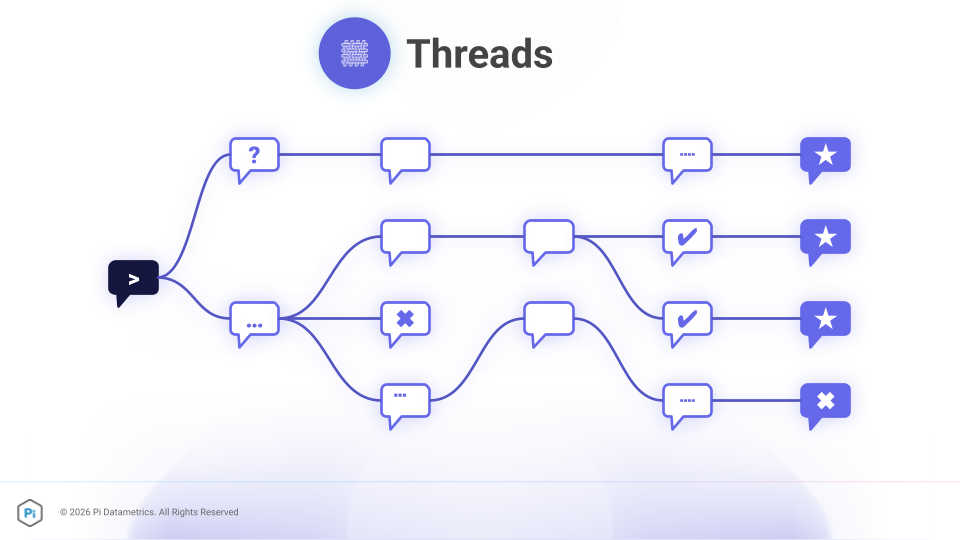
Every answer shapes the next question until they gradually build enough confidence to make a decision.
That's how people naturally explore information, and it's how modern content should be designed.
I often say:
Prompts are tactical. Conversations are strategic.
Rather than asking:
"Which prompts should we optimise for?"
Ask:
"What conversation is our audience trying to have?"
That single shift changes how you approach content.
If you'd like to explore this concept further, read my guide, What Prompts Should I Track for AI Search? In it, I explain why mapping complete conversations is far more valuable than tracking isolated prompts, how to identify the questions that shape a conversation and how to uncover the opportunities that matter most for your brand.
Build content around the entire journey
A conversation rarely ends on one webpage.
Someone might begin with an introductory guide, watch a webinar, compare different approaches, read a customer story, explore a product page and finally download a report before making a decision.
Every interaction contributes to the wider conversation.
That's why I encourage organisations to stop thinking in terms of individual articles and start thinking in terms of connected content ecosystems.
Every asset should have a defined purpose within that ecosystem.
A pillar guide introduces the subject.
Supporting articles answer specific questions.
Videos demonstrate expertise in a conversational way.
Original research provides evidence.
Case studies demonstrate outcomes.
Product pages help people take action.
Rather than competing with one another, every asset should reinforce the same expertise, terminology and point of view, creating multiple opportunities for people, search engines and AI systems to understand and recommend your brand.
4. Entities
Make your brand easy to understand
The next principle of the Interpretation Stack is Entities.
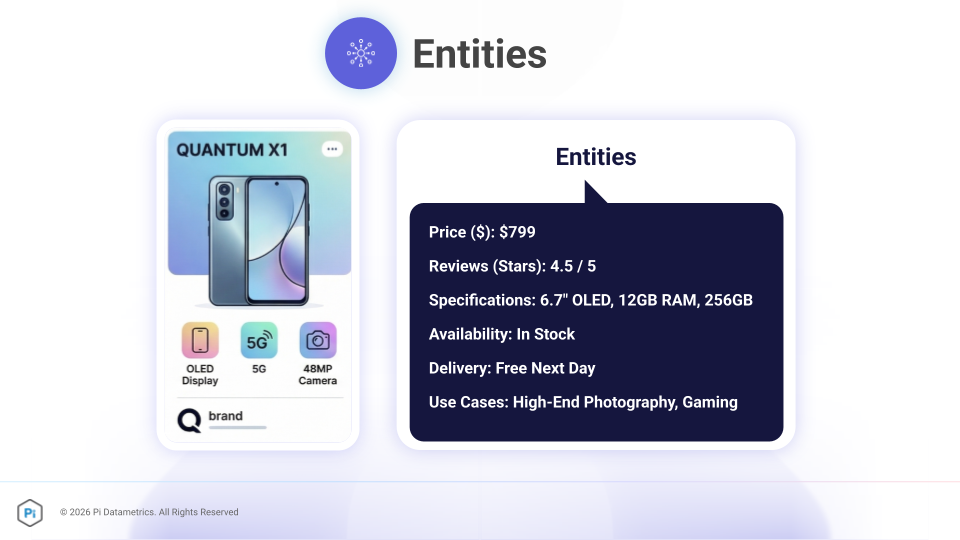
Search engines have always tried to understand the relationships between people, organisations, products and ideas. AI systems are taking that a step further. Rather than simply recognising your brand name, they build an understanding of what your brand represents through the attributes associated with it.
That's an important distinction.
People experience brands through design, storytelling, customer service and emotion.
Machines don't.
They interpret brands through the information available to them.
For a product, that might include its features, materials, intended audience, price, availability, specifications and use cases. For a business, it could include the products and services it offers, the industries it serves, the expertise of its people, its research, partnerships, customers and reputation.
A modern content strategy should make those relationships as clear as possible.
Don't assume search engines will connect the dots for you.
Explain how your products relate to one another. Demonstrate where your expertise comes from. Show how your research supports your services. Connect your people to the topics they genuinely understand.
The clearer those relationships become, the easier it is for search engines and AI systems to interpret your brand correctly.
Avoid becoming generic
One of the risks of AI search is that generic information becomes compressed.
If ten brands describe the same product using the same language, there's very little reason for an AI system to preserve one description over another.
The content becomes interchangeable.
The best way to avoid this is by providing richer, more distinctive information.
Go beyond manufacturer descriptions.
Explain how a product performs in the real world.
Show where it succeeds and where it doesn't.
Demonstrate the problems it solves.
Connect it to genuine customer experiences.
The same principle applies beyond ecommerce.
For service businesses, explain your methodology rather than simply listing your services. Show how your process differs, share examples of your work and demonstrate outcomes through research, case studies and practical experience.
The more distinctive your attributes become, the more likely your brand is to remain recognisable as conversations become increasingly detailed.
5. Reputation
Your brand becomes what the ecosystem agrees it is
Your website communicates how you want your brand to be understood.
Your reputation reflects how the wider digital ecosystem actually understands it.
That's a significant shift for modern content strategy because your website is no longer the only place where search engines and AI systems learn about your business.
They also learn from news publications, industry websites, customer reviews, creators, partners, research reports, social platforms, forums and countless other sources.

Together, these signals help validate, reinforce or challenge the claims you make about yourself.
That's why I often say:
Agents don't experience your brand. They interpret its attributes.
Increasingly, your brand becomes what the wider ecosystem agrees it is, not simply what your website says it is.
Owned and earned content therefore need to work together.
Your website should establish your expertise through guides, research, videos and product information.
PR, speaking engagements, customer advocacy, independent reviews, creator partnerships and industry recognition reinforce that expertise beyond your own channels.
These shouldn't be treated as separate marketing activities.
They're all contributing to the same interpretation.
Putting the Interpretation Stack into practice
The Interpretation Stack is designed to be used as a working framework. When we develop or review content at Pi Datametrics, we use the following questions to assess whether each part of the ecosystem is doing its job.
- Are we creating the right inputs?
- Does the content demonstrate firsthand experience, authenticity, social relevance and trust?
- Are we contributing something new?
- Does the content provide genuine depth, originality and a distinctive perspective?
- Are we supporting the entire conversation?
- Have we anticipated the questions that naturally follow, or have we only answered the first one?
- Have we clearly defined our entities?
- Can search engines easily understand our products, services, expertise and the relationships between them?
- Does the wider ecosystem reinforce our expertise?
- Do external signals support the way we want our brand to be interpreted?
Together, those questions provide a practical way to review individual assets and the wider content ecosystem without turning the framework into another checklist.
Measuring content performance across traditional search, AI search and AI assistants
Creating great content is only half the challenge. You also need to understand whether it's actually influencing the conversations that matter.
Traditional SEO metrics remain essential. Rankings, organic visibility, traffic, conversions and revenue show how well your content performs in classic search and help identify opportunities for further optimisation.
AI search requires a different layer of measurement.
Rather than asking whether a single page ranks for a keyword, the question becomes:
Is your brand being understood, trusted and recommended throughout the conversation?
At Pi Datametrics, we believe that means measuring far more than individual AI responses.
You need to understand:
- Which conversations your audience is having.
- Where your brand appears throughout those conversations.
- Which pages, videos and other owned assets are creating citation doorways.
- Which publishers, creators and third-party websites are influencing recommendations.
- How your brand sentiment and accuracy change across AI search.
- Whether your visibility strengthens or disappears as conversations develop.
- Which competitors are consistently being recommended instead.
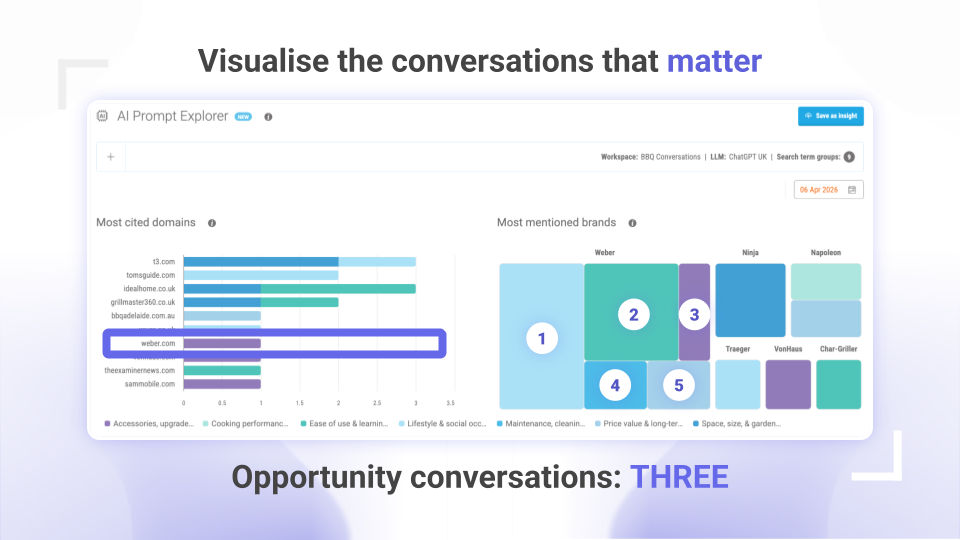
Image source: Pi's AI Search Visibility Tool
Looking at one AI-generated response only tells you what happened at one moment in time.
Measuring hundreds or thousands of conversations reveals how AI systems consistently interpret your brand, your expertise and your products.
That's why Pi Datametrics AI Search Visibility Tool measures visibility across the entire conversational landscape, helping organisations understand not just whether they're present, but where, why and how they're being recommended.
The Interpretation Stack provides the framework for creating content that performs. Pi Datametrics provides the intelligence to measure how effectively that framework is working across traditional search, AI search and AI assistants.
Through the Pi Platform, Answer Engine Optimisation (AEO) Services and Agentic AI Services, we help enterprise organisations understand how their brands are being interpreted, identify the content and reputation gaps limiting visibility, and build connected ecosystems that are easier for search engines, AI systems and agents to trust and recommend.




Never miss a post
Join our mailing list and have our SEO news delivered straight to your inbox.