
When it comes to understanding visibility across Google AI Mode, ChatGPT and other AI surfaces, the question we're asked most often is:
"What prompts should I be tracking?"
In the video below, I explain why tracking individual prompts only tells part of the story, how AI search journeys evolve into multi-turn conversations, and how we map conversation spaces to understand how brands perform across the conversations that matter most.
Now, tracking prompts isn't inherently wrong. If you want to understand how you perform for a specific prompt, that's fine - albeit there's nothing you can do with that output alone and also you can't optimise for a prompt!
The problem is that people don't search that way.
When someone begins a search today, they may start with a keyword in Google or a prompt in ChatGPT. Very quickly, that evolves into a conversation.
On average, those conversations span 4.25 turns.
Search today is a journey of exploration and discovery. Users begin with a question, receive an answer, then continue exploring related topics, comparisons and follow-up questions as they build confidence in a decision.
Nobody stops at the first prompt.
So why do we spend so much time focusing on the result of an individual prompt when, in reality, that prompt rarely exists in isolation?
At Pi Datametrics, we focus on the conversation instead.
Rather than tracking prompts individually, we build sets of prompts that are mathematically calculated to map entire conversation spaces. This allows us to understand not how a brand performs for a single prompt, but how it performs across the conversations its audience is actually having.
The short answer
If you're wondering what prompts you should be tracking for LLMs, you're asking the wrong question.
The more valuable question is:
Which conversations influence decisions in my market?
Once you understand those conversations, you can begin measuring visibility, sentiment, mentions and citation opportunities across the journeys that matter most.
What prompts should I track?
The short answer is that you shouldn’t focus on individual prompts at all.
Let me show you what I mean.
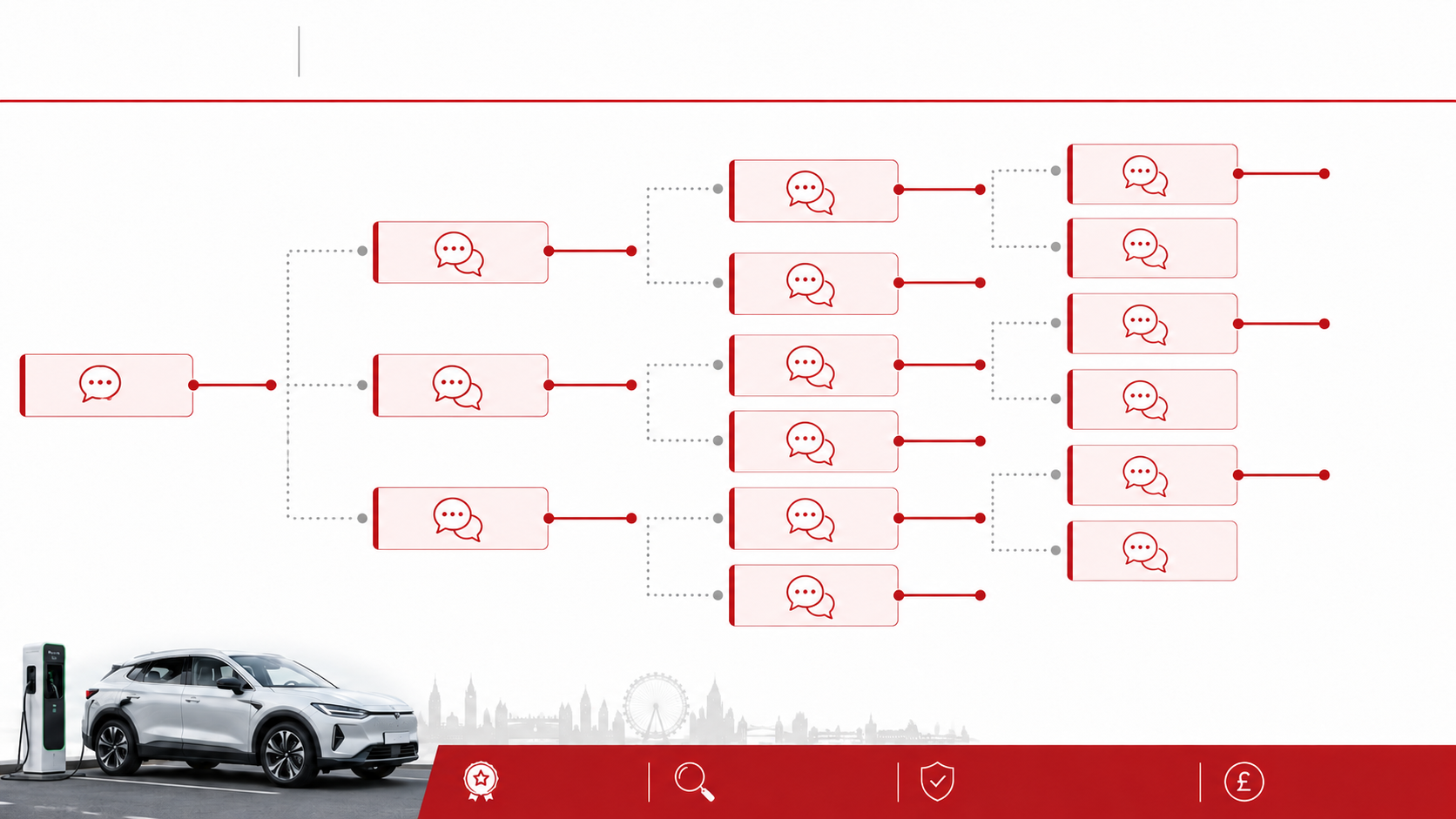
Search journeys rarely begin and end with a single prompt. Users explore topics through multiple conversational turns.
Search today isn’t question and answer.
Imagine we’re looking for a new electric vehicle.
We might begin with a simple question. From there, we ask a follow-up question. That answer leads to another question, a comparison, a concern or a new avenue of research.
As users gather information, conversations naturally branch into multiple directions. They explore practical considerations, costs, reliability, alternatives and recommendations before making a decision.
This is how search journeys work today.
In other words, nobody goes searching and walks away happy after a single prompt.
Prompts are often between 23 and 60 words in length, while journeys average 4.25 turns.
There is very little value in understanding visibility for one prompt in isolation.
What matters is understanding visibility across the entire journey.
Let me show you how we map conversation spaces
Let’s turn that theory into practice.
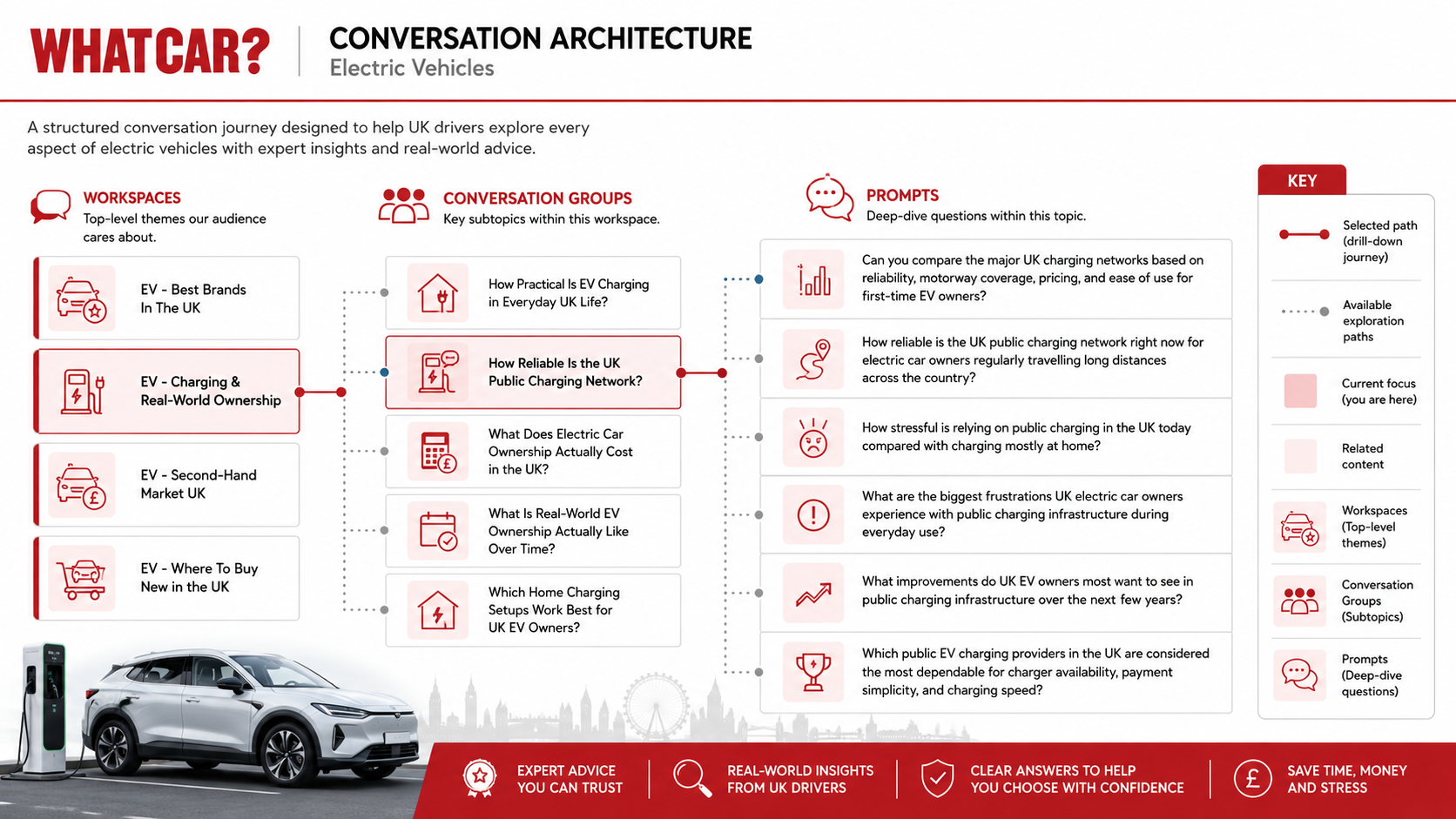
Pi maps topics, conversation groups and prompts to create a complete view of the conversation landscape.
In this example, we’re looking at electric vehicles.
We begin by identifying the major topics people care about:
- Best EV Brands in the UK
- EV Charging & Real-World Ownership
- EV Second-Hand Market
- Where to Buy New in the UK
We call these workspaces.
In reality, there could be dozens of them. The goal is to identify the major themes people explore when researching a topic.
This discovery process is powered by Pi Datametrics’ AI Prompt Research tool.
Rather than relying on static keyword lists, AI Prompt Research helps uncover the prompts, questions and conversation pathways people explore across AI search. This allows us to identify the topics, workspaces and conversation groups that matter most before measuring visibility within them.
Within each workspace sit multiple conversation groups.
For example, within EV Charging & Real-World Ownership, users may explore questions such as:
- How practical is EV charging in everyday life?
- How reliable is the public charging network?
- What does EV ownership actually cost?
- Which home charging setup works best?
These are the practical concerns and decision-making questions real users explore when researching a purchase.
Then we come to the prompts themselves.
The prompts individually are largely meaningless.
As we’ve already discussed, you can’t optimise for a single prompt. Looking at performance for an individual prompt will get you nowhere.
Looking at performance across a mathematically engineered set of prompts designed to cover an entire conversation space tells a very different story.
That’s what Pi measures.
Understanding who is winning the conversation
Once conversation spaces have been mapped, the next step is understanding how your brand performs within them.
This is where Pi Datametrics’ AI Search Visibility tool come into play.
AI Prompt Research helps uncover the prompts, topics and conversation pathways that matter. AI Search Visibility then measures how brands perform across those conversations, helping teams understand who is being mentioned, where citation opportunities exist and how visibility compares against competitors.
Rather than analysing prompts in isolation, Pi measures visibility across entire conversation spaces, providing a more representative view of how brands perform across Google AI Mode, ChatGPT and other AI search surfaces.
From here, we can begin visualising the search landscape surrounding those conversations.
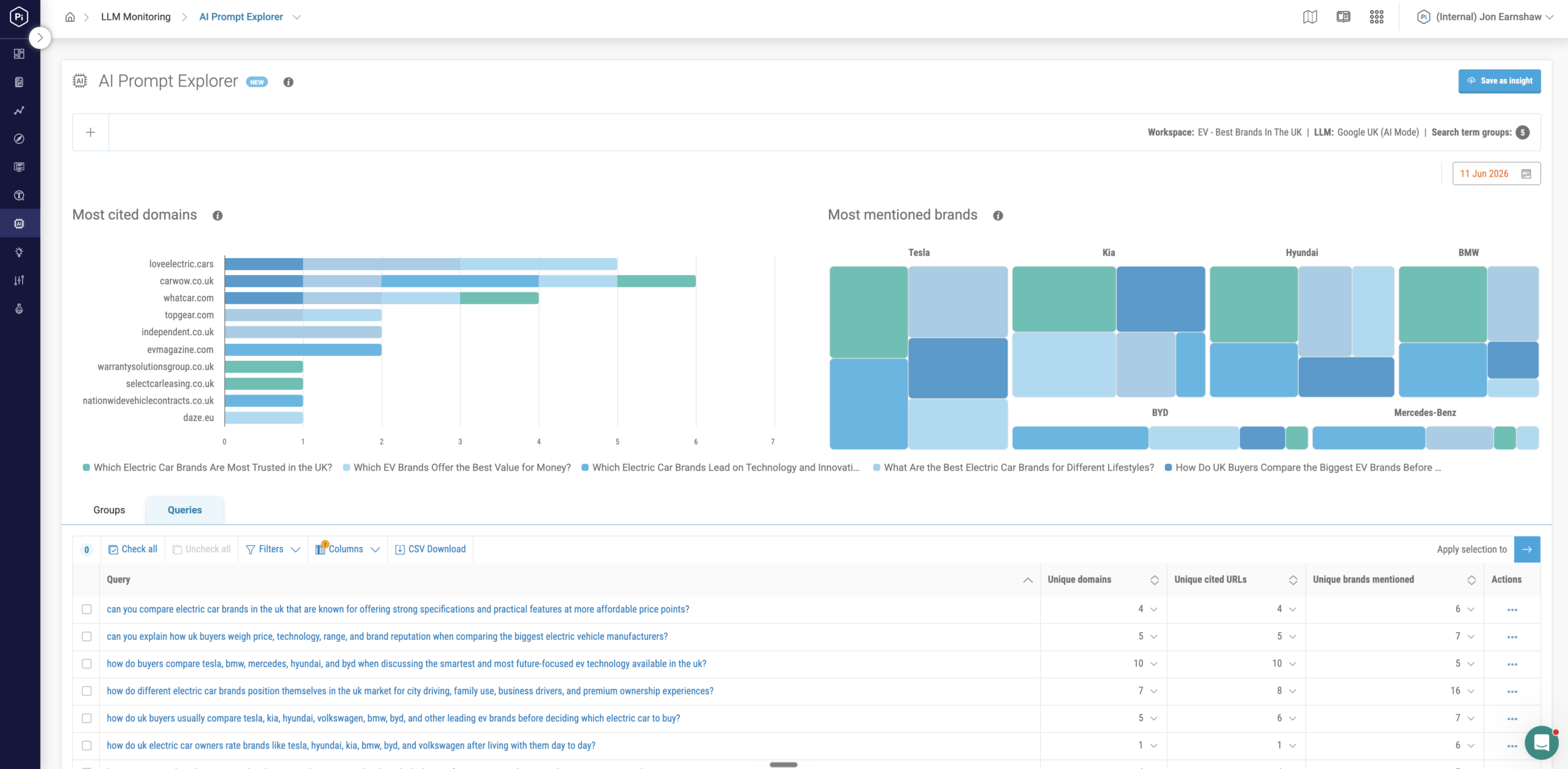
Understand which brands dominate conversations across an entire topic area using Pi’s AI Search Visibility Tool.
In this example, we’re looking at conversations around the best EV brands in the UK.
The most mentioned brand by a considerable margin is Tesla. It’s mentioned across almost every conversation we’ve mapped. Behind Tesla come Kia, Hyundai, BMW, BYD and Mercedes.
These are owned and earned mentions across the conversation space.
This allows us to understand not simply who appears for a prompt, but who is consistently winning the conversation. More importantly, it highlights which brands are present across multiple stages of the customer journey and which brands are absent from key discussions altogether.
Looking at visibility through this lens provides a far more representative view of AI search performance than analysing individual prompts in isolation.
Citation doorways: The new battleground
Understanding who is being mentioned is important.
Understanding who is earning citations is arguably even more valuable.
These are what we call citation doorways.
Citation doorways are the domains and pages AI platforms reference when generating responses. They create a pathway from the conversation layer into a website’s content ecosystem.
In our electric vehicle example, domains such as Carwow and Love Electric Cars consistently earn citations across multiple conversations.
Why?
The answer is usually straightforward. Their content demonstrates depth, uniqueness and originality.
Those qualities help them earn trust within AI-generated responses and create opportunities for users to move beyond the conversation and into their content.
This is incredibly important.
AI search introduces a new layer between brands and audiences. Citation doorways are how you move people from that conversation layer into your content ecosystem.
For many brands, understanding and improving citation performance will become one of the most important measures of AI visibility.
Understanding which content creates citation doorways
Knowing that a domain is earning citations is useful.
Understanding why it is earning citations is where the real opportunity lies.
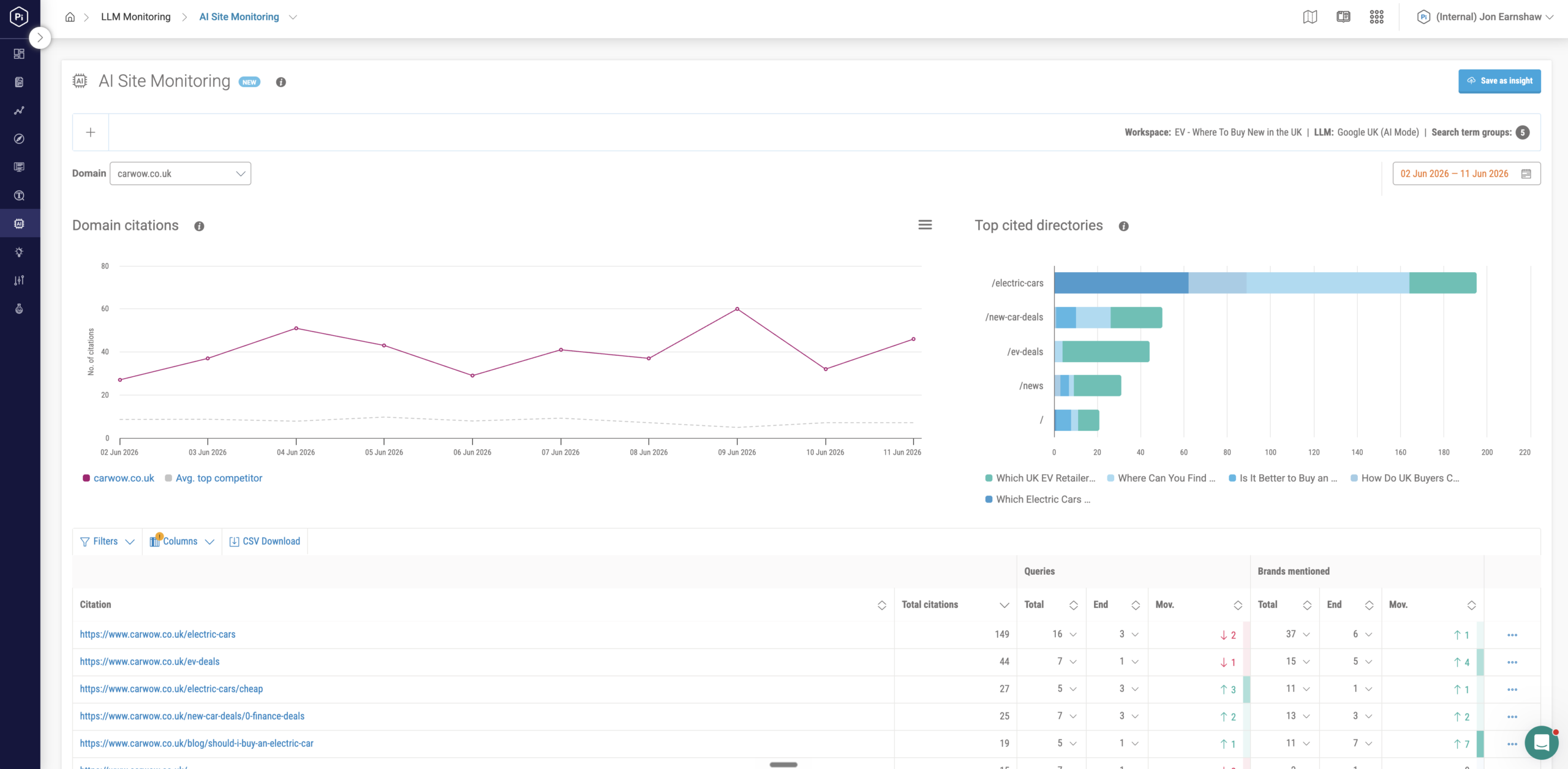
Understand which sections of a website are earning citations across different conversations using Pi’s AI Visibility Platform
Within Pi, we can identify exactly which sections of a website are earning citations across specific conversations.
Using Carwow as an example, we can see that its electric vehicle content consistently earns citations across conversations relating to value, retailer choice and EV deals.
This helps answer some critical questions:
- Which content themes are earning citations?
- Which conversations are driving visibility?
- Which pages are creating the strongest pathways into the website?
- Where are competitors outperforming us?
The result is a much clearer understanding of what content is genuinely contributing to AI visibility and what needs improving.
Understanding sentiment across conversations
Visibility is only part of the picture.
Brands also need to understand how they are being represented within AI conversations.
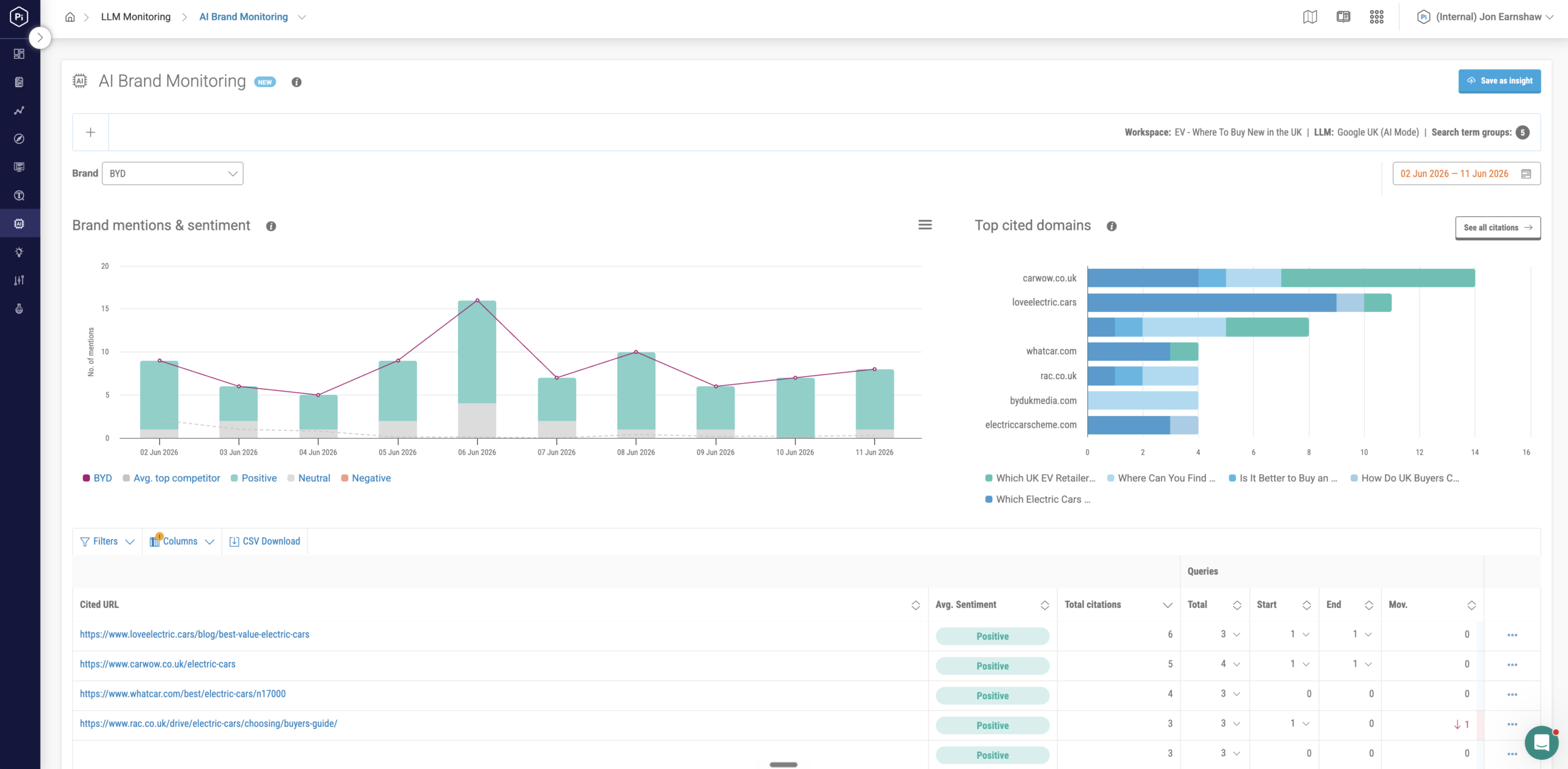
Monitor how your brand is being discussed across AI conversations and identify the sources influencing perception using Pi’s AI Search Visibility Tool
Using BYD as an example, we can see not only how often the brand is mentioned, but whether those mentions are positive, neutral or negative.
We can also identify the domains contributing to those mentions and understand which conversations are shaping perception.
This creates a much richer view of performance than visibility metrics alone.
It’s not just about being present in the conversation.
It’s about understanding how your brand is being discussed once it gets there.
So that’s a lot of data. What do we do next?
So the next question becomes:
How do we make sense of it all?
This is why Pi developed the Conversation Presence Index (CPI).
The Conversation Presence Index provides a single view of how a brand performs across all conversations relevant to its audience.
Rather than analysing one prompt or one conversation at a time, CPI measures overall presence across an entire conversation landscape.
It helps answer questions such as:
- How many conversations are we present in?
- How does our presence compare with competitors?
- What sentiment surrounds our brand?
- Are we increasing our presence over time?
- Are we opening more citation doorways?
The result is a clearer understanding of overall AI visibility and how that visibility is evolving.
Turning insights into action
Understanding performance is only the beginning.
The next step is improving it.
Pi’s recommendations layer identifies:
- Conversations where visibility is weak
- Topics competitors dominate
- Missed citation opportunities
- Areas where content signals can be improved
The platform can then prioritise those opportunities based on value and potential impact.
By improving content depth, uniqueness and originality, brands can increase their likelihood of earning citations, opening more citation doorways and strengthening their presence across AI conversations.
The goal isn’t simply to measure performance.
The goal is to improve it.
So, which prompts should you track?
By now, you can probably see why there isn’t a simple answer.
The reality is that there is no fixed list of prompts that accurately represents how people search across AI surfaces.
Conversations evolve. Users ask follow-up questions, compare options, refine intent and explore topics from multiple angles before making a decision.
The challenge with AI search isn’t finding a list of prompts to track.
It’s understanding the conversations influencing discovery, consideration and decision-making within your market.
As AI search continues to evolve, brands need a way to identify those conversations, understand how they perform within them and uncover opportunities to improve visibility.
That’s why Pi Datametrics combines conversational discovery, conversation mapping and the Conversation Presence Index to help brands understand how they perform across AI search.
Not for a prompt.
For the conversations that matter.
See how your brand performs across AI conversations
If you’d like to understand how your brand performs across real multi-turn conversations, uncover citation opportunities and measure your Conversation Presence Index, we’d love to show you how it works.
Book a demo to see how Pi maps conversations, measures visibility and identifies opportunities across AI search.
Ready to go deeper?
Watch the on-demand webinar to discover how conversation mapping helps enterprise teams identify high-value conversations, uncover citation doorways and improve AI search visibility.




Never miss a post
Join our mailing list and have our SEO news delivered straight to your inbox.