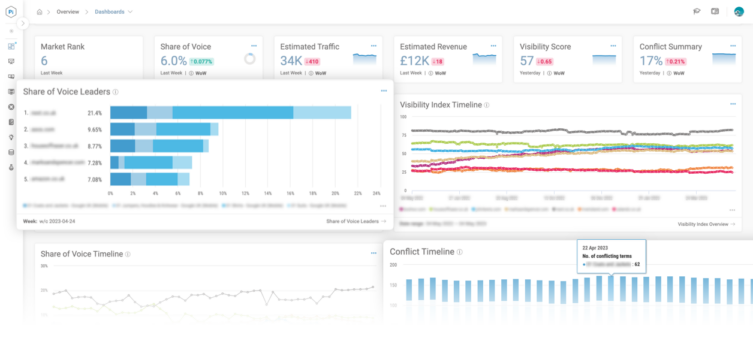
From AI search to traditional search – discover the complete fashion landscape
Fashion Market Intelligence
Updated weekly, explore the latest fashion dashboard across AI and traditional search, alongside weekly insights highlighting the biggest market movements, emerging trends and standout performers.
Fashion Sector Intelligence methodology
Pi’s Fashion Sector Intelligence uses a representative dataset of fashion searches and AI conversations to show how consumers discover, compare and evaluate brands and products.
The dataset covers informational, inspirational and transactional questions across major fashion categories. It is designed to reflect the directions a consumer’s research can take rather than relying on a small collection of isolated keywords or prompts.
- Markets: UK & US
- Search environments: Google Search and Google AI Mode
- Categories analyzed: Womenswear | Menswear | Kidswear | Non-gender-specific Fashion | Footwear | Accessories
- Search dataset: Long-tail informational and transactional queries reflecting fashion discovery, comparison and purchase behavior
- Conversation dataset: Questions covering products, styles, occasions, requirements, brand comparisons and recommendations
- Dashboard refresh frequency: Weekly
- Market insights publication: Weekly
Want to know how your brand performs?
Explore how your brand ranks across traditional search, AI visibility and brand health signals within the fashion sector, alongside your key competitors inside the Pi platform.
Explore market leaders by industryExplore market leaders across related industries to understand how brands perform across different sectors and where new opportunities are emerging.
Explore market leaders across related industries to understand how brands perform across different sectors and where new opportunities are emerging.
Fashion industry reports and market analysis
Alongside live fashion industry statistics, we publish detailed fashion market reports exploring demand trends, competitive positioning and AI search visibility shifts.
These downloadable fashion industry reports provide structured analysis for brands, agencies and analysts seeking deeper market insight.
Explore all market analysis reports →


Fashion intelligence for a changing discovery journey
Fashion discovery now takes place across search results, shopping features, images, videos, publishers, social platforms and AI-generated conversations.
A consumer might begin with a broad style or occasion, compare products and brands, investigate fit or sustainability, look for reviews and then ask an AI platform for a recommendation.
Pi connects traditional search performance with AI search intelligence so fashion teams can understand where their brand appears throughout this journey, which competitors are gaining attention and which sources influence the final choice.
Compare fashion market leaders across traditional and AI search
Traditional search remains a critical foundation for fashion discovery and ecommerce performance. Product, category and editorial content must be accessible, relevant and authoritative before it can perform consistently across the wider search landscape.
However, a fashion brand with strong Google visibility may not receive the same level of attention in an AI-generated answer.
Pi helps fashion teams compare:
- Traditional search Share of Voice and market position
- Presence in Google AI Mode and AI Overviews
- Mentions and recommendations in ChatGPT, Perplexity and other supported AI platforms
- The retailers, publishers, communities and creators cited as sources
- Brand sentiment across AI-generated answers
- Competitive visibility across different stages of product discovery
Comparing these environments shows whether established search leaders retain their position in AI discovery or whether emerging fashion and lifestyle brands are entering the conversation.
Map the conversations shaping fashion discovery
Consumers rarely search for one product in isolation. A broad question about what to wear can develop into a detailed conversation about style, occasion, budget, fit, materials, ethics and brand suitability.
A journey might develop as follows:
Find inspiration → explore a category → compare products → evaluate brands → validate the choice → purchase
Pi’s Conversation Mapping helps fashion teams identify the questions surrounding these journeys and understand where their brand remains present or drops out.
This can reveal whether a brand appears during initial inspiration but disappears when shoppers ask about sizing, sustainability, value, quality, delivery or alternatives to a competitor.
Identify the fashion prompts and questions worth monitoring
Effective AI measurement should begin with the consumer’s need rather than an arbitrary list of product prompts.
Pi’s AI Prompt and Keyword Research helps teams build representative conversation sets around products, styles, occasions, audience requirements, brand comparisons and purchase decisions.
These can combine traditional search demand with the follow-up questions generated during AI conversations. This provides a more stable view than testing a small collection of manually selected prompts.
Read our guide to choosing which prompts and conversations to track.
Turn consumer demand into fashion competitive intelligence
Historical search-demand data shows how interest changes across products and fashion categories. It helps teams distinguish a short-lived trend from a seasonal pattern or a more sustained change in consumer behavior.
Combining demand data with weekly Share of Voice and competitor movement helps fashion teams understand:
- Which categories and product themes are attracting greater interest
- Which brands and retailers are benefiting from changing demand
- Where competitors are gaining or conceding visibility
- How consumer behavior differs between the UK and US
- Where emerging trends may create new content and category opportunities
This provides SEO, ecommerce, content and market-intelligence teams with a shared view of how consumer demand connects with competitive performance.
Benchmark fashion brands and categories
Fashion benchmarking should go beyond comparing the visibility of entire domains.
Pi enables teams to organize search intelligence around specific competitors, product categories and consumer needs. This makes it possible to compare performance in womenswear, menswear, footwear, accessories and other strategically important areas.
Teams can identify where a competitor leads, which categories are driving that advantage and whether its visibility comes from owned pages, shopping results, publishers, videos or AI citations.
Understand the SERP features shaping fashion visibility
Fashion search results contain more than standard organic listings. Images, videos, Popular Products, AI Overviews and other features can all influence what shoppers see and which assets attract attention.
Pi’s SERP Feature Tracking shows where these features appear, which brands or domains hold them and where there are opportunities to improve visibility beyond a standard result.
This helps fashion teams understand whether products, imagery, video content, editorial pages or third-party retailers are creating the most effective doorways into their brand.
Find the sources influencing fashion recommendations
AI-generated fashion recommendations can be shaped by brand websites, retailers, publishers, review platforms, communities, social content and videos.
Pi reveals which domains and pages are being cited, what information they contribute and whether those sources support your brand or a competitor.
These citation doorways help teams understand whether they need to strengthen an owned category page, provide clearer product information, publish more useful supporting content or establish visibility through an influential external source.
Monitor fashion brand presence and sentiment
Appearing in an answer is only part of the picture. Fashion teams also need to understand how their brand is being presented.
Pi enables you to examine brand mentions and sentiment across AI-generated answers, compare individual competitors and investigate the sources influencing the narrative.
This can reveal whether a brand is associated with the styles, products and values it wants to own, or whether incomplete, outdated or negative information is shaping perception.
Create fashion intelligence around your own market
The public dashboard provides a cross-market view of the fashion sector. Inside Pi, teams can create datasets around their own commercial priorities.
- Fashion brands, retailers and marketplaces
- Priority product ranges and category hierarchies
- Womenswear, menswear, kidswear, footwear and accessories
- Direct competitors and emerging brands
- Traditional search terms and AI conversation groups
- Google, ChatGPT, Perplexity and other supported search environments
- Brand mentions, citations, sentiment and source influence
- Images, videos, Popular Products, AI Overviews and other SERP features
The result is a clearer view of fashion performance throughout inspiration, discovery, comparison and purchase rather than a single snapshot of where a website appears.
Understand your fashion brand’s performance
See how your brand performs against fashion competitors across traditional and AI search. Identify changes in consumer demand, category visibility and the sources influencing fashion discovery.