
SEO & keyword cannibalization: the complete guide to identifying, fixing and preventing search conflicts
By Jon Earnshaw|15 Jul 2026|8 min read
Keyword cannibalization is one of the most common causes of unstable search rankings, yet it's also one of the most misunderstood areas of SEO.
Many marketers associate cannibalization with duplicate content, while others believe it only occurs when two pages target the same keyword. In reality, SEO cannibalization is much broader. It happens whenever multiple pages compete for the same search intent, making it difficult for search engines to determine which page should rank.
As websites grow, these conflicts naturally emerge. New blog posts, landing pages, product pages and category pages are continually added, often by different teams with different objectives. Without a clear content strategy, it's easy for pages to overlap, compete and dilute each other's visibility.
For more than two decades, Pi Datametrics has helped enterprise brands identify, understand and resolve search conflicts. Long before keyword cannibalization became a widely discussed SEO topic, the Pi team were researching how competing pages affect rankings and developing methodologies to detect, measure and resolve these conflicts at scale.
In this guide you'll learn:
- What SEO cannibalization is
- The different types of cannibalization
- How to identify keyword cannibalization
- Real examples of cannibalization
- How to fix search conflicts
- How to prevent cannibalization as your site grows
What is SEO cannibalization?
SEO cannibalization occurs when multiple pages compete for the same search intent, sending mixed signals to search engines about which page should rank.
Instead of strengthening your visibility, competing pages can split authority, create ranking instability and prevent your strongest content from performing as well as it should.
Although the term keyword cannibalization is commonly used throughout the SEO industry, keyword conflicts are only one type of SEO cannibalization. As websites become larger and more complex, search conflicts can occur in several different ways.
Over the last twenty years, Pi Datametrics has helped pioneer the identification and analysis of search conflicts across enterprise websites. Our research has consistently shown that cannibalization isn’t simply a duplicate content problem. It’s often the result of overlapping page themes, competing internal signals and unclear topical ownership across a website.
Understanding the different types of SEO cannibalization makes it easier to identify the root cause of ranking instability and apply the right solution.
The different types of SEO cannibalization
1.Keyword cannibalization
Keyword cannibalization is the most common form of SEO cannibalization.
It occurs when two or more pages compete for the same keyword or closely related search intent. As search engines alternate between different URLs, rankings often fluctuate and neither page performs as strongly as it could.
This guide focuses primarily on identifying, fixing and preventing keyword cannibalization.
2.Subdomain cannibalization
Search conflicts don’t always happen within a single website section.
Many enterprise websites operate multiple subdomains, such as support centers, knowledge bases or regional websites. When pages across those subdomains begin targeting the same search intent, authority can become divided between them.
If you’re managing multiple subdomains, understanding how they compete in search is essential.
Read our guide to Subdomain Cannibalization →
3.Semantic conflict
Not every search conflict involves identical keywords.
As search engines become better at understanding topics rather than individual keywords, pages covering similar subjects can begin competing semantically, even when they target different phrases.
These semantic conflicts can be difficult to identify without understanding the wider topical relationships across your website.
Read our guide to Semantic Flux →
4.International cannibalization
International websites introduce another layer of complexity.
Incorrect hreflang implementation, duplicated regional content or poorly targeted country pages can all cause search engines to rank the wrong regional version for users.
These international conflicts are becoming increasingly common as businesses expand into global markets.
What is keyword cannibalization?
Keyword cannibalization occurs when two or more pages compete for the same keyword or search intent, making it difficult for search engines to determine which page should rank.
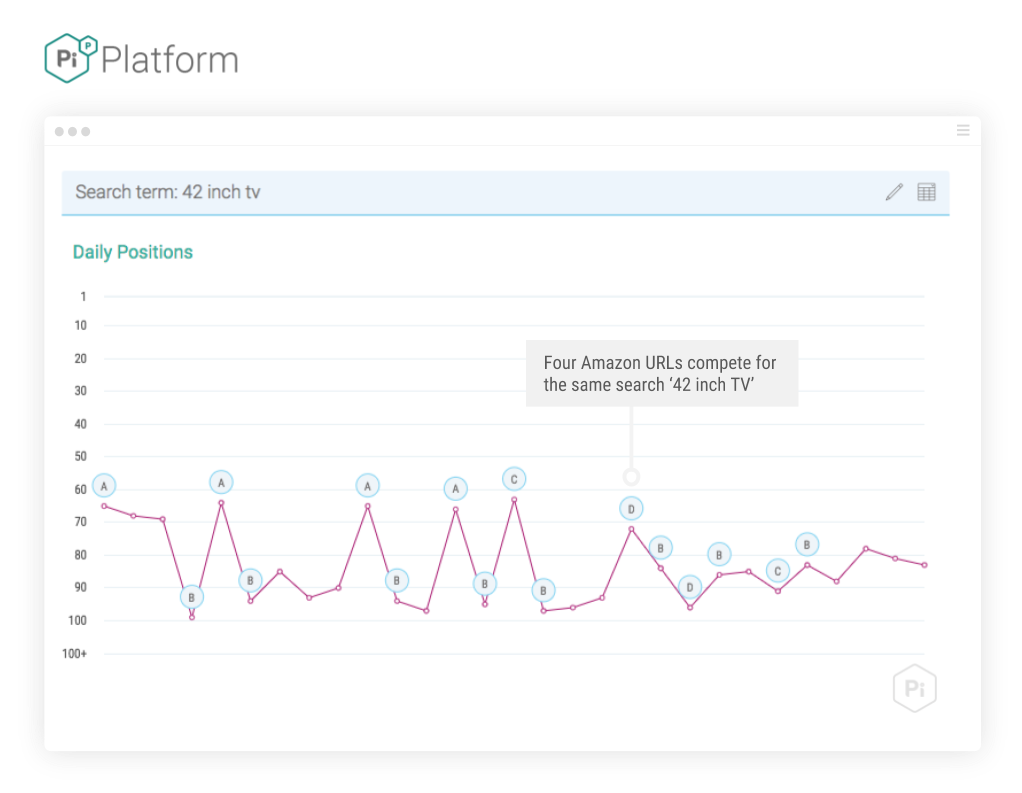
This doesn’t necessarily mean the pages contain duplicate content.
In many cases, they’re entirely different pages that happen to satisfy a similar user need.
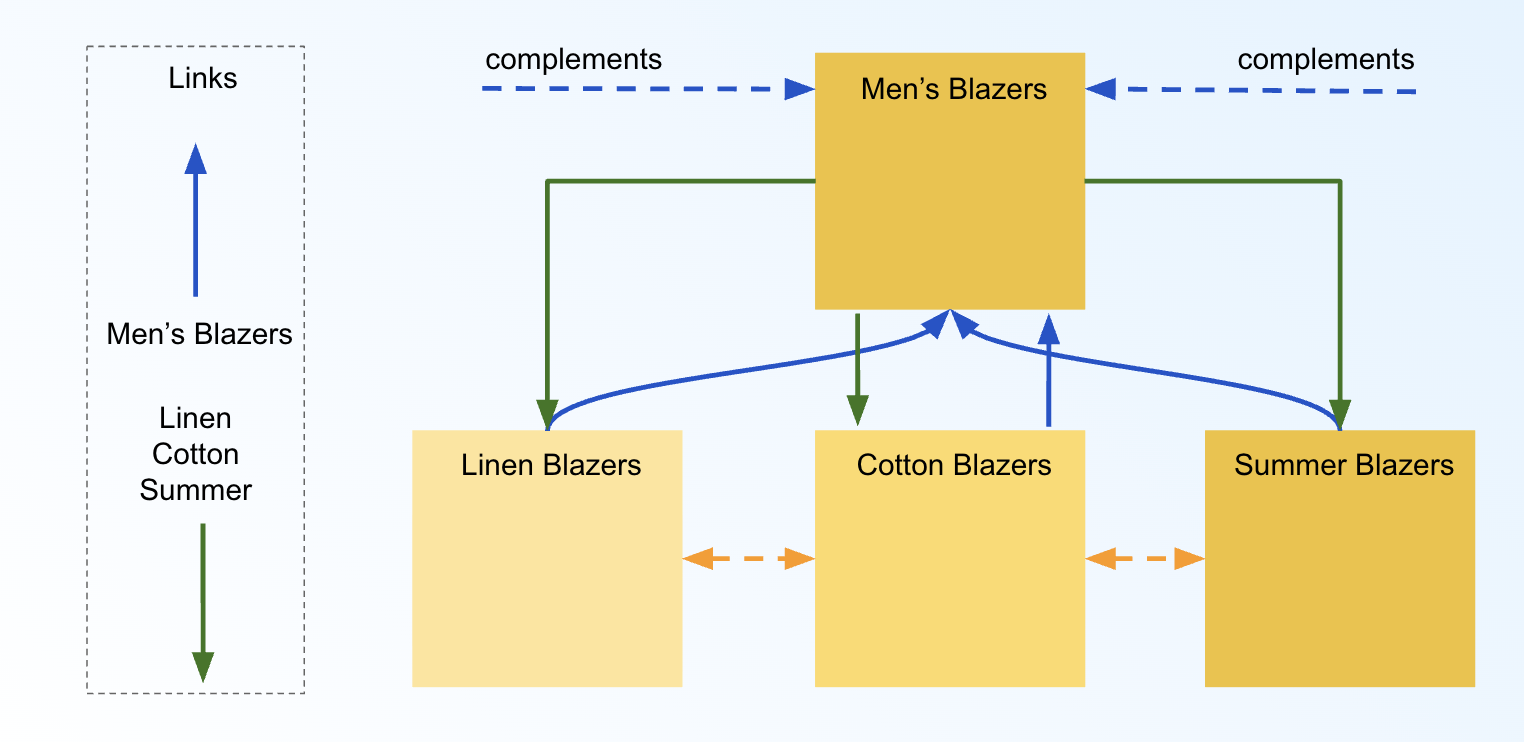
Imagine an ecommerce retailer with separate category pages for:
- Men’s Linen Blazers
- Men’s Cotton Blazers
Neither page competes for its specific product category.
However, both pages may begin competing for the broader search “men’s blazers” if their titles, headings and content are optimized too similarly.
This is why I describe keyword cannibalization as a keyword problem rather than simply a content problem. Two pages can compete for one keyword while performing perfectly well for dozens of others. Likewise, two pages covering similar subjects may never cannibalize each other if their search intent is clearly differentiated. This distinction remains one of the most important principles when diagnosing cannibalization. It reflects the way search engines evaluate relevance at the query level rather than treating every similar page as duplicate content. This concept has been central to Pi Datametrics’ approach to identifying SEO conflicts for many years.
Understanding which page should become the primary destination for a keyword is therefore far more important than simply removing similar content.
What causes keyword cannibalization?
One of the biggest misconceptions about keyword cannibalization is that it only happens because of duplicate content.
In my experience, that’s rarely the case.
Most websites don’t intentionally create duplicate pages. Instead, keyword cannibalization develops over time as content grows. New blog posts are published, landing pages are added, product ranges expand and different teams begin creating content around similar topics.
Individually, every page makes sense.
Collectively, they begin competing for the same search intent.
Over the years, I’ve found that most keyword conflicts can be traced back to four common causes.
1. Overlapping Page Themes
The most common cause of keyword cannibalization is overlapping page themes.
Google no longer looks at pages in isolation. Instead, it evaluates the overall topic a page is trying to satisfy.
When multiple pages have similar page titles, headings, copy and topical focus, Google begins receiving mixed signals about which page should rank.
For example, imagine you have published:
- Running Shoe Buying Guide
- Best Running Shoes
- How to Choose Running Shoes
Although each article has a different title, they’re all trying to answer a very similar question.
From Google’s perspective, they’re competing for the same search intent.
That doesn’t necessarily mean one of the pages is wrong.
It simply means you’ve made Google’s decision much harder.
The clearer each page’s purpose, the easier it becomes for search engines to understand which page deserves to rank.
2. Authority Injection
Sometimes keyword cannibalization isn’t caused by content at all.
Instead, it’s caused by authority.
Over the years, I’ve seen countless examples where the intended landing page suddenly loses rankings because another page unexpectedly becomes stronger.
This often happens because a page attracts:
- More external backlinks
- More internal links
- Greater user engagement
- Increased visibility elsewhere on the website
I refer to this as authority injection.
A good example is a downloadable PDF or blog post unexpectedly attracting links from external websites. Even though it was never intended to rank, Google begins treating it as the stronger page because of the authority it has accumulated.
The result?
Your original landing page starts competing against content you never expected to rank in the first place.
3. Poor Internal Linking
Internal linking is one of the strongest signals you can give search engines.
Every internal link helps reinforce the relationship between pages and indicates which content is most important.
Problems begin when those signals become inconsistent.
For example:
- Product pages link to one guide.
- Blog posts link to another.
- Navigation links to something else entirely.
Each link is effectively telling Google a different page should be the primary destination.
Eventually, Google has to decide for itself.
Clear, consistent internal linking helps consolidate authority and removes much of this uncertainty.
4. Non-Contextual Optimization
This is probably the biggest cause of keyword cannibalization that I see today.
Traditionally, SEO has followed a fairly simple process.
Someone has an idea for a new piece of content.
They carry out keyword research.
They optimize the page.
Then they publish it.
Only afterwards do they discover another page already targets exactly the same search intent.
I refer to this as non-contextual optimization because the page has been optimized in isolation, without considering the wider content ecosystem.
Modern SEO should work differently.
Before creating a new page, you should understand:
- What users are actually searching for.
- The search intent behind those searches.
- Which pages already exist on your website.
- How competitors satisfy that intent.
- Whether a new page is actually needed.
When you optimize within that wider context, you dramatically reduce the likelihood of creating keyword conflicts in the future.
Identifying Keyword Cannibalization
Keyword cannibalization usually reveals itself long before rankings disappear completely.
The first signs are often subtle.
You might notice:
- Rankings moving up and down unexpectedly.
- Different URLs appearing for the same keyword.
- A blog post replacing a landing page.
- Organic traffic declining despite publishing more content.
- Visibility fluctuating without any obvious technical issue.
These symptoms don’t automatically confirm keyword cannibalization.
However, they should prompt a closer investigation.
How to Identify and Fix Keyword Cannibalization
Before you can fix keyword cannibalization, you need to understand exactly where the conflict exists, which pages are involved and why search engines are alternating between them.
One of the biggest mistakes I see is making changes based on a fluctuating ranking graph alone.
A ranking drop does not automatically mean cannibalization. You need to look at the URLs ranking over time, the search intent each page satisfies and the signals Google is receiving from your content and internal linking.
Once the conflict has been confirmed, the objective is not simply to remove pages. It is to make it clear which page should own each important search intent.
The process has six stages.
Step 1: Identify Competing URLs
Start by finding out whether multiple URLs are ranking for the same keyword over time.
Look for:
- Different URLs replacing one another in the search results
- Rankings that repeatedly switch between pages
- A weaker page replacing the intended landing page
- Multiple pages optimized around the same intent
- Visibility declining as Google alternates between URLs
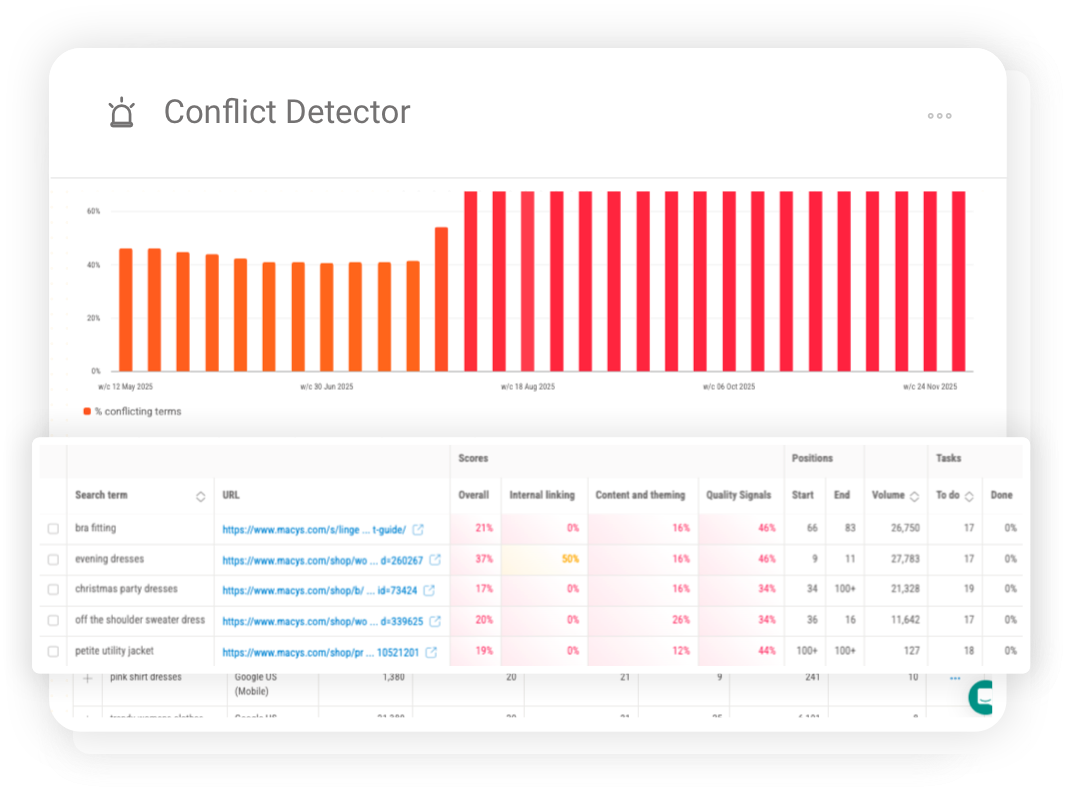
This is where Pi Datametrics’ keyword cannibalisation tool helps.
Pi’s conflict tool identifies the URLs competing for the same keywords, shows how ranking ownership changes over time and helps teams prioritize the conflicts having the greatest impact on visibility.
Rather than reviewing keywords manually, you can see where Google is uncertain about which page should rank and investigate the conflict at scale.
Step 2: Confirm the Search Intent Conflict
Multiple URLs ranking for the same keyword does not always mean there is a problem.
The next step is to determine whether the pages genuinely satisfy the same search intent.
Ask:
- Are both pages answering the same question?
- Are they targeting the same audience?
- Do their titles and headings overlap?
- Would a user expect to find the same information on both pages?
- Is one page clearly a better destination?
A category page, buying guide and comparison article may all rank for related searches without creating harmful cannibalization.
The issue arises when multiple pages are competing to serve the same purpose.
Step 3: Decide Which Page Should Rank
Once you have confirmed the conflict, decide which page should become the primary destination.
Consider:
- Which page best satisfies the search intent
- Which page has the strongest authority
- Which page fits the website architecture
- Which page is most valuable to users
- Which page supports your wider commercial goals
Every important search intent should have one clear owner.
Step 4: Consolidate or Differentiate the Content
What happens next depends on the relationship between the competing pages.
You may need to:
- Consolidate similar pages
- Merge overlapping content into one stronger page and redirect the weaker URL where appropriate.
- Differentiate the search intent
- Retain both pages but clarify their purpose through page titles, headings, copy and internal linking.
- Redirect outdated content
- Redirect an obsolete or lower-value page to the preferred destination.
- Leave both pages in place
If the pages satisfy different intents and the ranking movement is temporary, no major change may be required.
The right action should be based on the cause of the conflict, not a blanket rule.
Step 5: Strengthen the Preferred Page
Once you have selected the page that should rank, strengthen its relevance within the context of the wider search landscape.
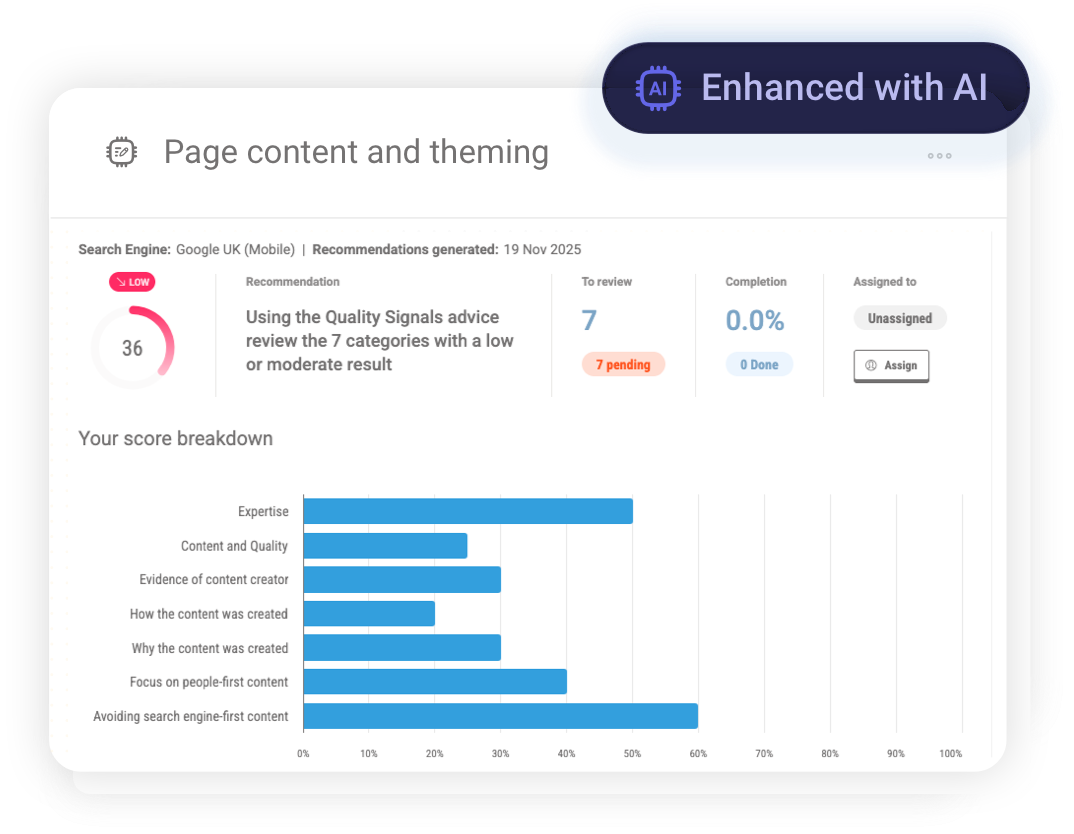
Pi Datametrics’ Optimize Now helps identify:
- Missing topical coverage
- Terms and themes that could strengthen relevance
- Content optimization opportunities
- Areas where competing pages provide greater depth
- Internal linking opportunities that support the preferred page
The aim is not simply to add more keywords. It is to make the page the clearest and most complete destination for the intended search.
Step 6: Reinforce the Page Through Internal Linking
Internal links should support the decision you have made.
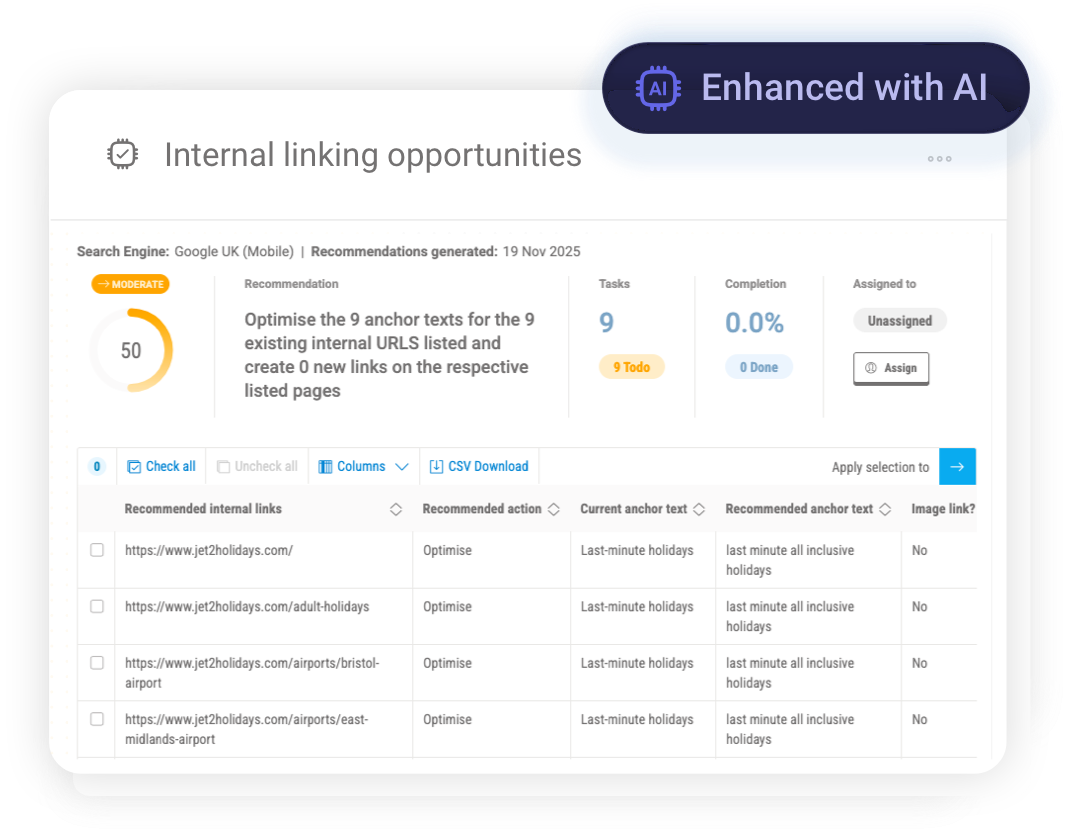
Relevant pages should consistently link toward the preferred destination using descriptive anchor text. This helps consolidate authority and reduces ambiguity about which page should rank.
Pi Datametrics can also surface internal linking opportunities across your site, helping teams strengthen the preferred page and create clearer topical relationships between content.
Step 7: Monitor the Conflict Over Time
After making changes, continue monitoring the affected keywords and URLs.
You want to see:
- One URL becoming the consistent ranking page
- Reduced switching between URLs
- Improved ranking stability
- Stronger visibility for the preferred page
- No new conflicts appearing as content is added
Cannibalization is not something you fix once and forget.
As websites grow, new pages, campaigns and content updates can introduce fresh conflicts. Ongoing monitoring helps identify them before they begin affecting performance.
Watch Jon Explain: How to Identify & Fix Keyword Cannibalization
If you’d prefer to see the methodology in action, watch my webinar below where I walk through real examples of keyword cannibalization, explain why search conflicts occur and demonstrate how to identify and resolve them.
How to Prevent Keyword Cannibalization
The best way to deal with keyword cannibalization is to prevent it from happening in the first place.
Before publishing new content, ask yourself:
- Does this topic already exist on my website?
- Which page should own this search intent?
- Am I strengthening an existing page or creating unnecessary competition?
The strongest websites aren’t built by publishing more content. They’re built by creating content with a clear purpose.
Every important search intent should have one destination page, supported by content that reinforces its authority rather than competing with it.
That’s why I encourage teams to think beyond individual pages and focus on building connected content ecosystems. When every page has a defined role, search engines have a much clearer understanding of your website and your visibility becomes far more stable over time.
Want to learn more? Watch my webinar below, where I explain how contextual optimization helps prevent keyword cannibalization before it happens.
Final Thoughts
Keyword cannibalization isn’t about having too many pages. It’s about making it clear which page should own each search intent.
When every page has a defined purpose and supports your wider content strategy, search engines can better understand your website and users are more likely to find the right content.
Whether you’re identifying existing conflicts or preventing new ones, the goal remains the same: create a website where every page has a clear role and contributes to your overall authority.
Pi Datametrics helps enterprise SEO teams identify competing URLs, monitor search conflicts and optimize content with greater confidence, making it easier to prevent keyword cannibalization before it impacts performance.
Demo the software today
Book your demo



Never miss a post
Join our mailing list and have our SEO news delivered straight to your inbox.