Think about all the content your brand creates. Your website, product pages, YouTube videos, Instagram posts, TikToks. You’re giving people more ways to discover your brand, and that content can appear across traditional and AI search.
So why would we measure your visibility by looking at your website alone?
“Where does our website rank?” is still an important question. But what if your video appears above your highest-ranking page? What if you’re the recommended seller in a product feature? Or AI recommends your brand without linking to your website at all?
That’s your brand being discovered. We need to be able to see it.
This is no longer just about website presence. And it’s no longer just about text.
Introducing total ecosystem visibility in Pi
We’ve expanded Pi’s analysis to reflect the different ways your brand appears across search. In this short video, I explain why we need to look at the whole brand ecosystem.
Alongside your website, you can now include your social and video channels, your seller identity within product listings, and brand mentions in AI responses. These are all part of the same brand ecosystem. Now you can bring more of that ecosystem into your analysis.
We call this total ecosystem visibility.
This update extends across Pi’s live search analysis and LLM tools, giving you a more complete view of your brand’s organic presence and how it compares with competitors.
It’s an evolution in what we measure. From the performance of your website to the wider presence of your brand.
Different searches. Different opportunities.
Every search is different. Look at the SERP. You could see product listings, videos, an AI Overview, traditional links, or a combination of them all.
Each feature gives your brand another opportunity to be seen. So we need to look at the whole results page. What’s appearing? Where is our brand? And what are we missing?
Take “Alexander McQueen sneakers black.” In this example, we see product listings, a traditional website result and an AI Overview on the same page.
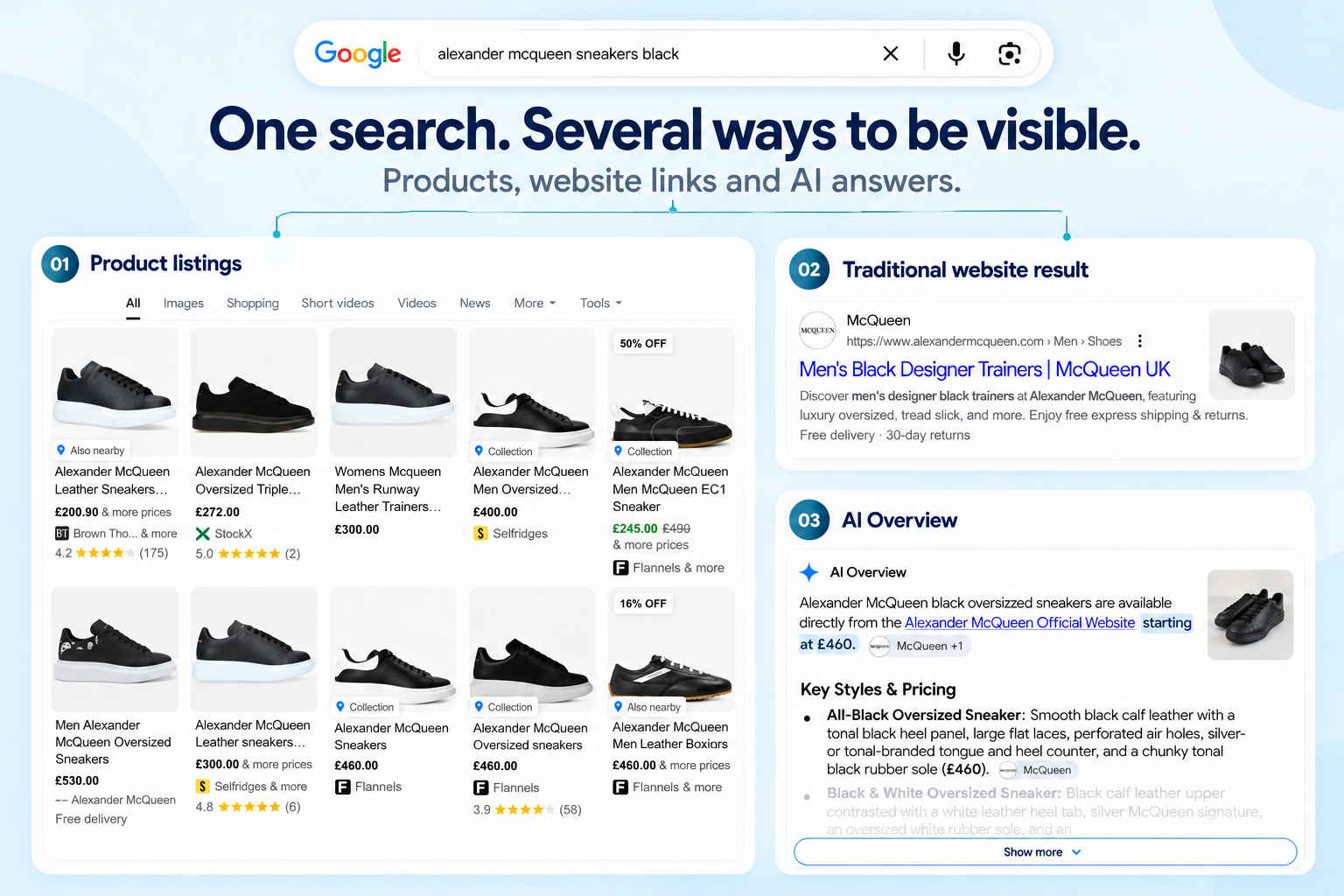
Different features give brands several ways to appear for the same search.
A website-only view won’t capture all of those opportunities. Within the product feature, for example, we need to identify the retailer recommended as the seller, rather than only looking for a link to its domain.
Your strongest result might surprise you
For one luxury fashion retailer in our analysis, Pi recorded position one for this search as a recommended seller within the product feature. Its traditional website result appeared lower down.
Look only at the website position and you miss its strongest placement.
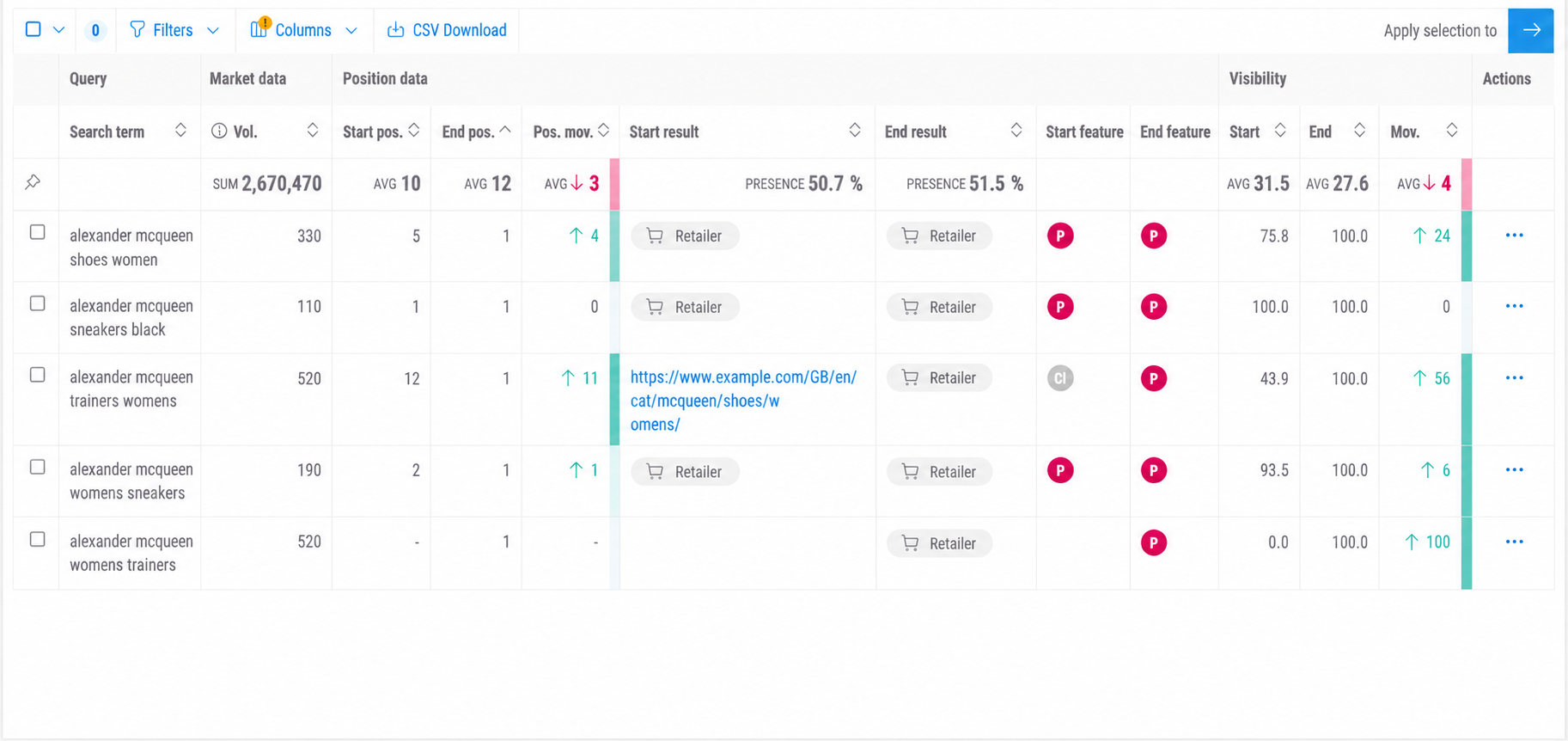
Image Source: Pi's Rank Tracker | Position Explorer Table
Now apply that thinking to your other content. Could your YouTube channel be earning visibility where your website struggles? Could an Instagram or TikTok video be your most prominent appearance for an important search?
You’ve invested in creating those assets. You should be able to understand where they’re working for your brand. Pi also lets you measure visibility directly within YouTube’s own search engine.
See more of your presence. Find more opportunity.
Bringing those assets together gives you a wider view of where to act.
Which competitors’ videos appear where yours are missing? Are you recommended as a seller for the products you stock? Where does your brand appear in AI conversations? And how is that presence changing?
You can investigate the results behind those patterns and decide where to focus, whether that’s website content, video, social or product and seller visibility.
Your website remains central to your search strategy. But your brand is bigger than its website.
Your measurement should reflect that.
Want to explore your brand’s total ecosystem visibility? Book a demo of Pi Datametrics.




Never miss a post
Join our mailing list and have our SEO news delivered straight to your inbox.