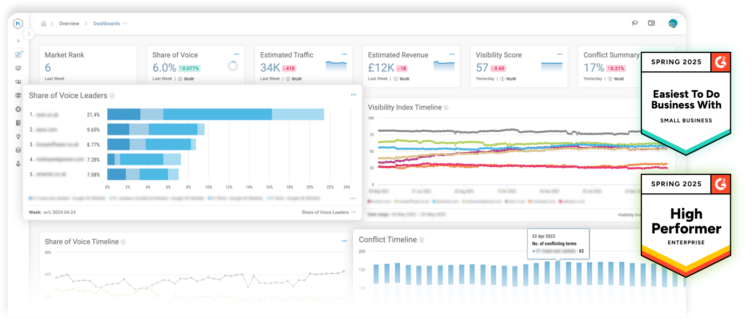
Turn search data into business intelligence
Understand how your brand, competitors and content perform across traditional search, AI-generated experiences and the wider search ecosystem.
Explore the intelligence in Pi or connect it to your reporting, technology and AI workflows.

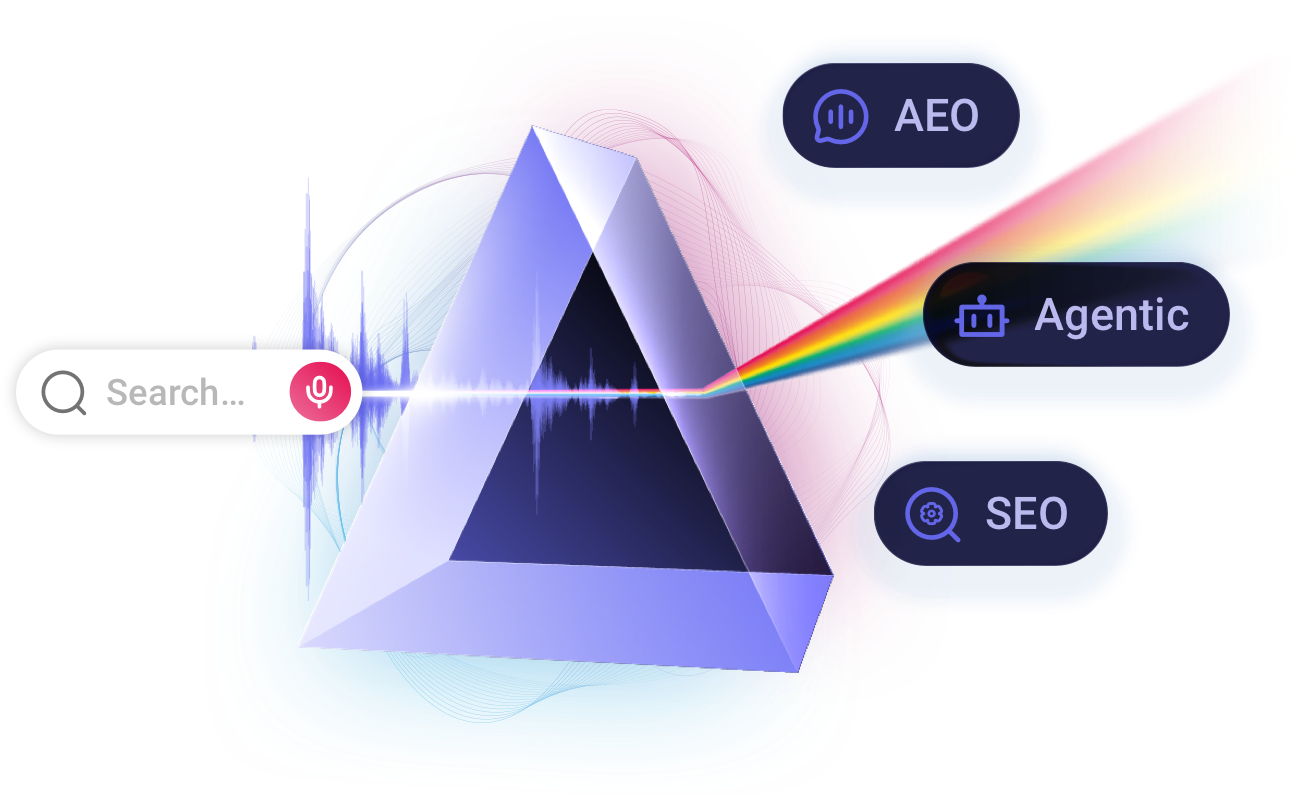
See the whole search landscape
Search visibility no longer belongs to the website alone. Audiences can discover your brand through traditional search results, AI Overviews, Google AI Mode, LLMs, YouTube videos, product listings and other digital assets.
Pi brings these signals together, giving SEO, analytics, martech and digital teams one connected view of how their brand ecosystem is performing.
Understand where your brand is visible, which competitors and sources influence discovery, and where the greatest market and commercial opportunities lie.
Track visibility wherever your audience searches



What can you understand with Pi data?

Search visibility
Measure rankings, returning URLs, SERP features, Share of Voice and overall visibility across traditional and AI-generated search experiences.

Conversation presence
See whether your brand enters the AI conversations that matter, where it remains visible and where competitors take its place.

Brand and source influence
Analyze brand mentions, sentiment, citations and cited pages to understand who AI talks about, which sources it trusts and what is shaping the resulting narrative.

Market and competitor intelligence
Compare brands, domains and category leaders across custom markets. Identify changes in competitive position, emerging challengers and the publishers influencing discovery.
Demand and commercial opportunity
Connect audience demand with visibility, estimated traffic, revenue potential and competitive performance to identify opportunities with greater commercial value.

Ecosystem visibility
Understand which websites, brands, products, video channels and other digital assets are visible across traditional search, AI search and YouTube.
Turn search data into measures that matter
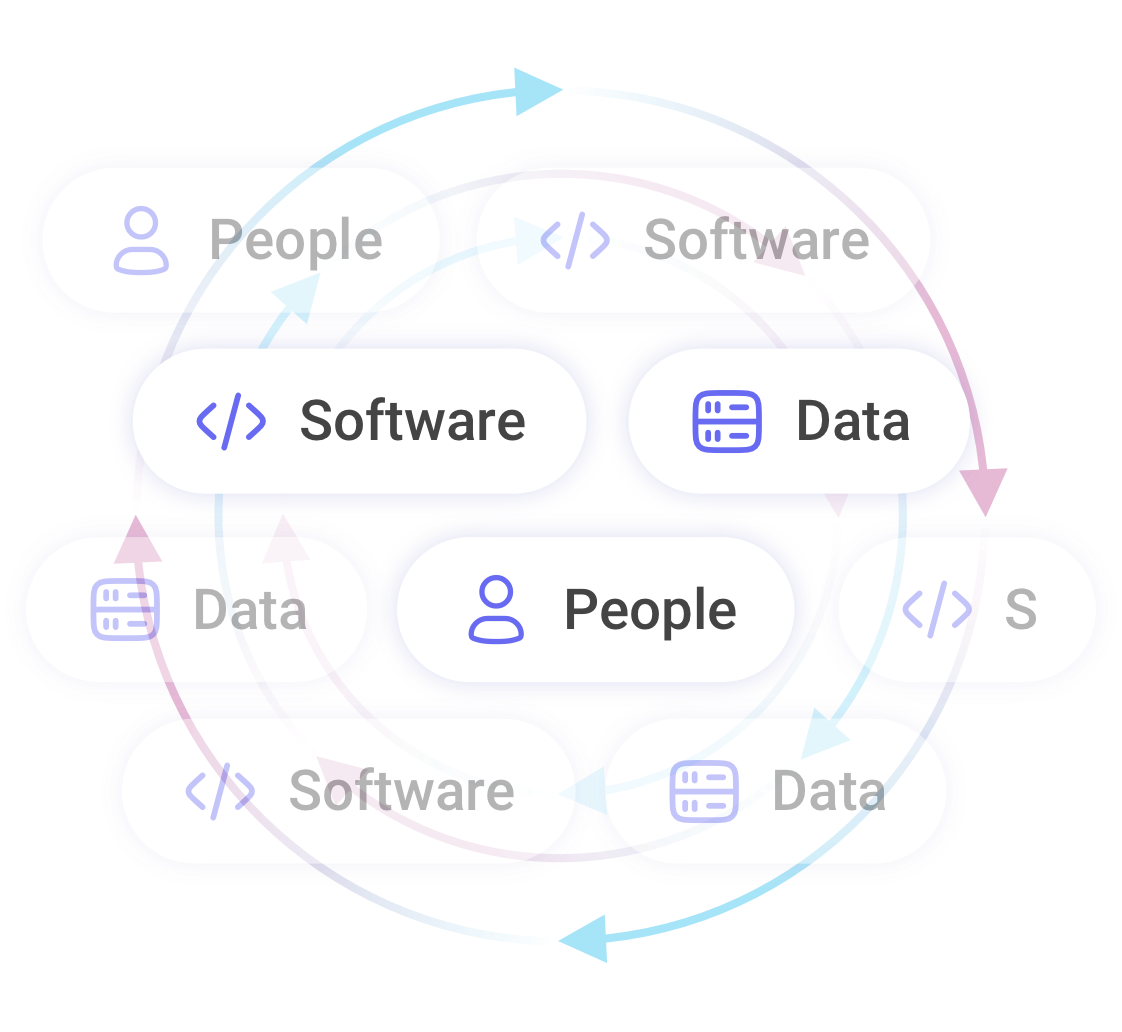
Pi combines enterprise-scale search data with proprietary data science and expert search knowledge.
Our data scientists transform complex traditional and AI search signals into measurements that help teams evaluate visibility, prioritize opportunities and connect performance with commercial impact. Pi’s search experts can then help you interpret the findings, identify the right actions and apply them across your organization.
- Conversation Presence Index: Measure how visible, influential and recommendable your brand is across the AI conversations that matter.
- Organic Value Score: Identify the relative value of search terms using monthly search volume, cost per click and competition data. Move beyond volume, prioritize opportunities with greater potential return and evaluate performance within the context of the complete market.
- Commercial Impact: Translate search performance into revenue-focused metrics such as Share of Value, estimated traffic, estimated revenue and revenue opportunity.
- Market benchmarking: Compare your visibility, value and opportunity with competitors and category leaders.
Use Pi independently or work with our search experts to develop custom datasets, interpret complex market changes and turn the intelligence into a practical strategy.
"Data-packed SEO tool"





Data-packed SEO tool
Chris O
Enterprise Business
Great tool for SEO reporting and performance exploration
Adam C
Digital Performance Manager
A fantastic tool which can be used across the whole business
Kate H
Enterprise Business
Connect Pi data to the way you work
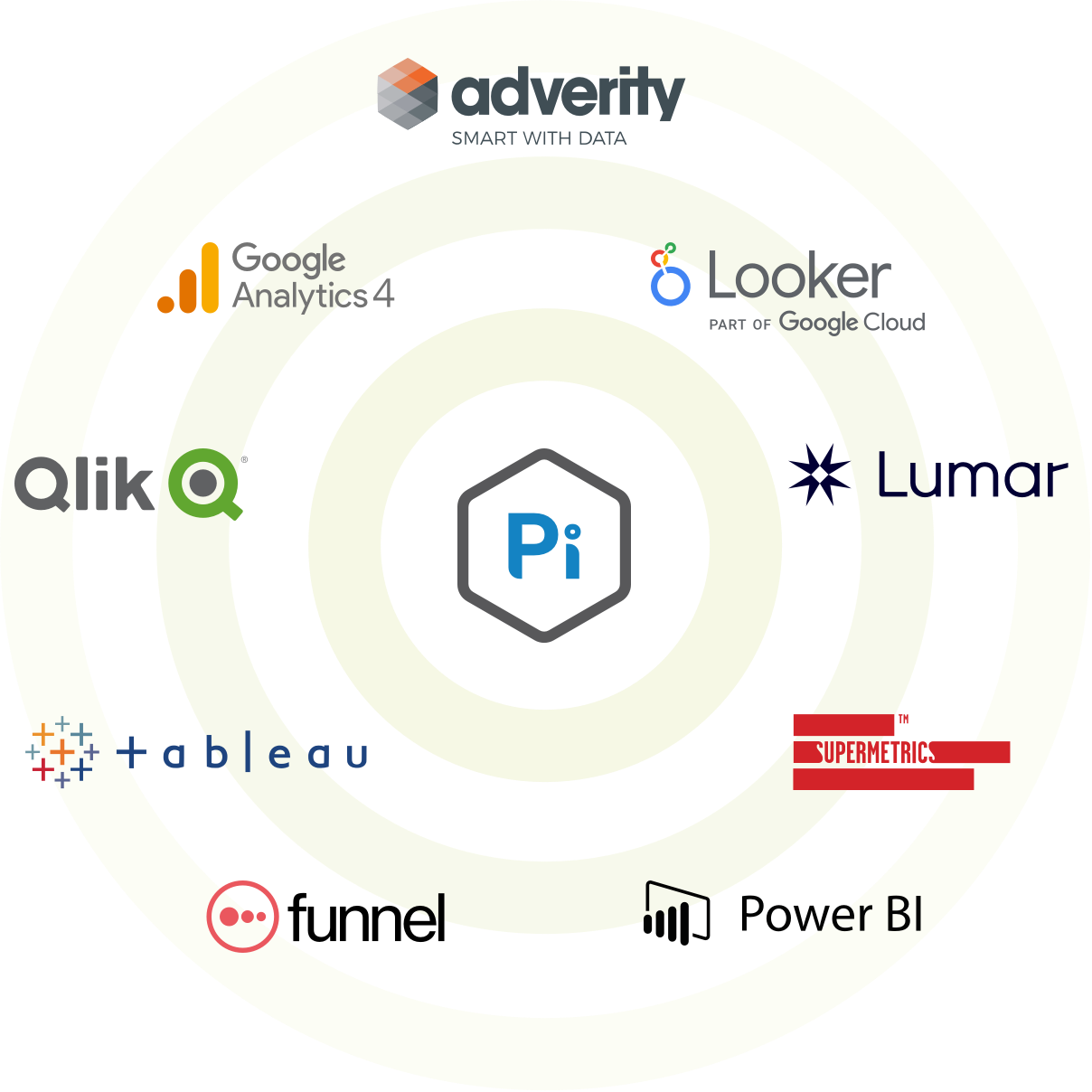
Pi’s search intelligence can be explored directly in the platform or connected to your organization’s reporting, technology and AI workflows.
Investigate your data through conversation
Connect a compatible AI assistant to Pi’s MCP Server and explore your search intelligence using natural language.
Ask follow-up questions, compare markets and competitors, connect traditional and AI search data, and turn your findings into reports, dashboards and visualizations.
Build Pi data into your technology
Use the Pi API to bring structured traditional and AI search data into your databases, reporting, applications and automated workflows.
Combine Pi with analytics, revenue and customer data to create the intelligence your organization needs.
For scheduled delivery, Pi Sync can transfer selected datasets into a SQL database for use within your analytics environment.
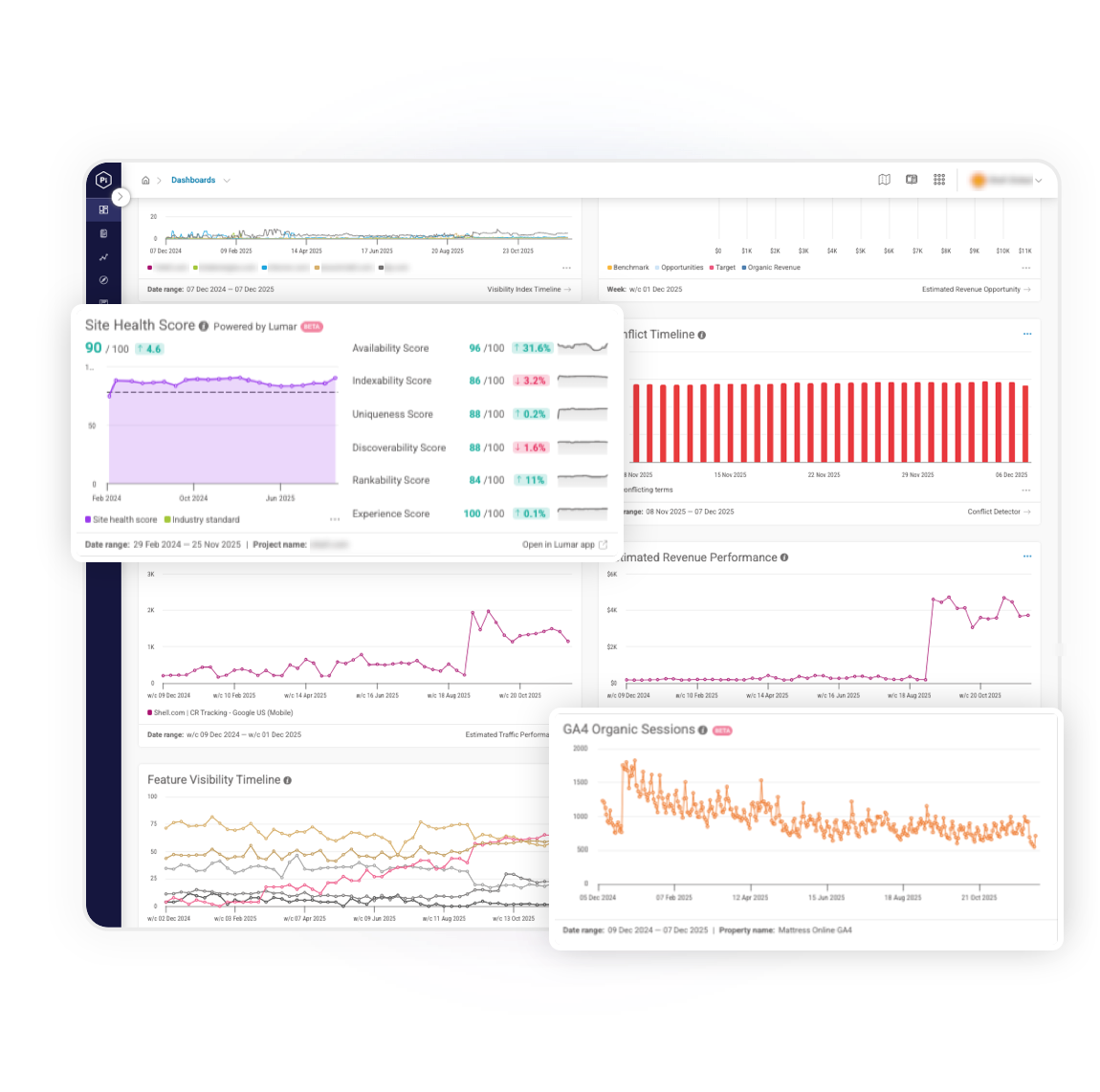
Connect search intelligence with the rest of your business
Bring Pi data together with analytics, conversion, revenue and customer information to understand how search performance relates to wider business outcomes.
Use the resulting intelligence to:
- Benchmark brands, products and international markets
- Automate enterprise dashboards and reporting
- Identify market and content opportunities
- Investigate the sources influencing AI-generated answers
- Connect visibility with traffic, revenue and ROI
- Support internal applications and AI-assisted workflows
Pi's Data frequently asked questions
Pi provides connected intelligence across traditional search, AI-generated search experiences and the wider brand ecosystem.
This includes rankings, returning URLs, SERP features, search demand, competitor visibility, brand mentions, AI citations, sentiment, source influence, YouTube visibility and proprietary commercial metrics.
The precise data available depends on the markets, search engines, devices and search experiences included in your Pi setup.
Pi can be configured to monitor performance across hundreds of global and regional search-engine configurations.
Supported environments include Google across international markets, Bing, Baidu, Yandex and YouTube, alongside AI-generated experiences and conversational platforms such as Google AI Overviews, Google AI Mode, ChatGPT and Perplexity.
Depending on the environment, Pi can measure rankings, returning URLs, SERP features, brand and domain presence, mentions, citations, sentiment, source influence and competitive visibility.
Coverage varies by market, device, search engine and AI platform. Contact the Pi team to confirm the configuration required for your organization.
AI-generated responses can vary by platform, prompt, follow-up question, timing and source.
Pi measures representative prompt and conversation sets over time, enabling teams to compare brand presence, mentions, citations, sentiment, recommendations and competitive visibility across the conversations that matter.
The underlying responses and cited sources can then be investigated alongside the resulting measurements.
Pi supports 2-hourly, daily, weekly and monthly data collection, depending on the dataset and workspace configuration.
Use 2-hourly Rapid Tracking during launches, major events and periods of search volatility. Daily and weekly data supports ongoing monitoring, while monthly data provides a longer-term view of market movement and seasonality.
Historical visibility helps teams distinguish temporary fluctuations from sustained performance changes. AI and traditional search datasets may follow different collection and availability schedules.
Yes. Pi can be configured around multiple international markets, global and regional search engines, desktop and mobile devices, custom competitor groups and different data frequencies.
Contact the Pi team to confirm the precise search engines, AI platforms, markets and devices required by your organization.
Yes. Structured Pi data can be requested through the Pi API or delivered into a SQL database through Pi Sync.
This allows organizations to use Pi data within their existing warehouse, reporting and business intelligence environments. The implementation route will depend on your technology stack and data requirements.
Yes. Pi data can be combined with analytics, conversion, customer and revenue information within your own data or reporting environment.
This enables teams to investigate the relationship between search visibility, website behavior and commercial performance. The connection method will depend on your analytics architecture and Pi configuration.
The Pi API provides structured data for databases, reporting, applications and automated workflows.
Pi’s MCP Server allows compatible AI assistants to access Pi intelligence so users can investigate it through natural-language questions and follow-up conversations.
The API is designed for moving and integrating data. MCP is designed for conversational analysis.
Connect search intelligence to your business
Bring traditional search, AI search and your wider brand ecosystem into view.
See where your organization is visible, understand what is influencing performance and focus investment on the opportunities that matter.