
Agentic Commerce: What does it mean for brands, customers and SEO teams?
15 Jan 2026|10 MIN READ
Transactions are moving away from websites and into conversations across AI surfaces.
That’s no longer a prediction; it’s infrastructure that already exists.
At Pi we've been predicting the emergence of conversational search for many years and now we’re at the point where agents are seamlessly working their way into these conversations and for every online business - this is a call to action that cannot be ignored.
AI agents are now capable of completing commerce tasks, from product discovery to checkout, across multiple platforms.
What is Agentic Commerce?
Watch the short explainer below:
In this short video, Jon explains how agentic commerce shifts transactions from websites to AI-to-AI interactions.
- OpenAI powers Instant Checkout in ChatGPT through the Agentic Commerce Protocol (ACP), letting AI agents transact directly in chat.
- Google uses the Universal Commerce Protocol (UCP) to enable “agentic commerce” across AI Mode in Search and the Gemini app, covering discovery, purchase, and post-purchase support. UCP acts as a common language so any AI surface can communicate with any merchant backend.
From pages to protocols to agents
The big shift is architectural.
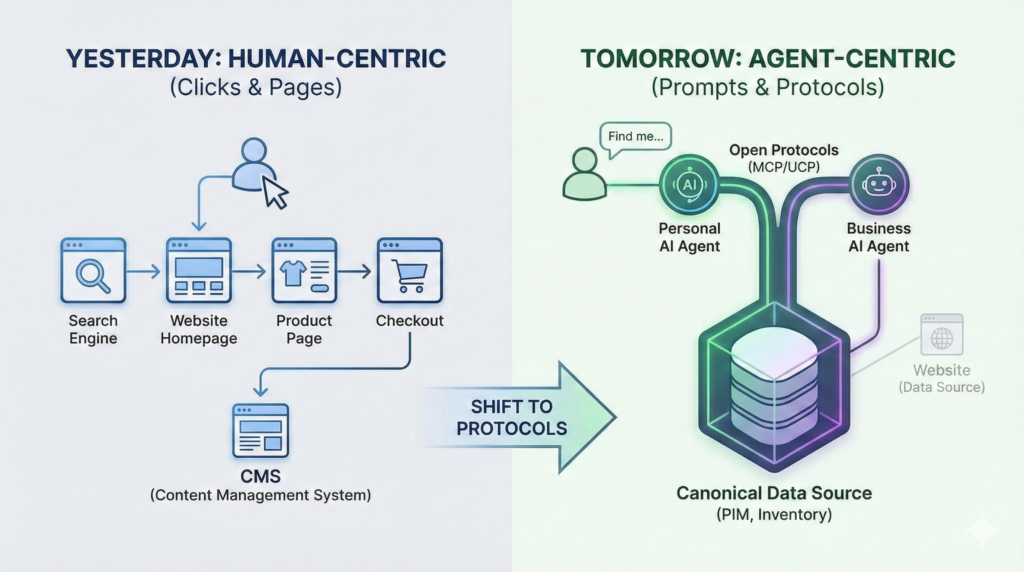
Yesterday’s stack:
- Website (CMS + checkout)
- Analytics
- Organic search (plus ads) driving sessions to pages
Tomorrow’s stack:
- Open protocols for agentic commerce (ACP, UCP) that define the “language” between agents, merchants and payment providers
- AI surfaces (Google AI Mode, Gemini, ChatGPT etc.) that host the conversations
- Business agents that represent your brand on these surfaces
Personal agents that represent the customer, orchestrating what to buy, from whom, and under what constraints. These will become the digital proxies for human intent. The software entities that humans speak to, delegate tasks to, and TRUST with their financial credentials. Think of personal agents as a ‘mode of interaction’ within an existing ecosystem.
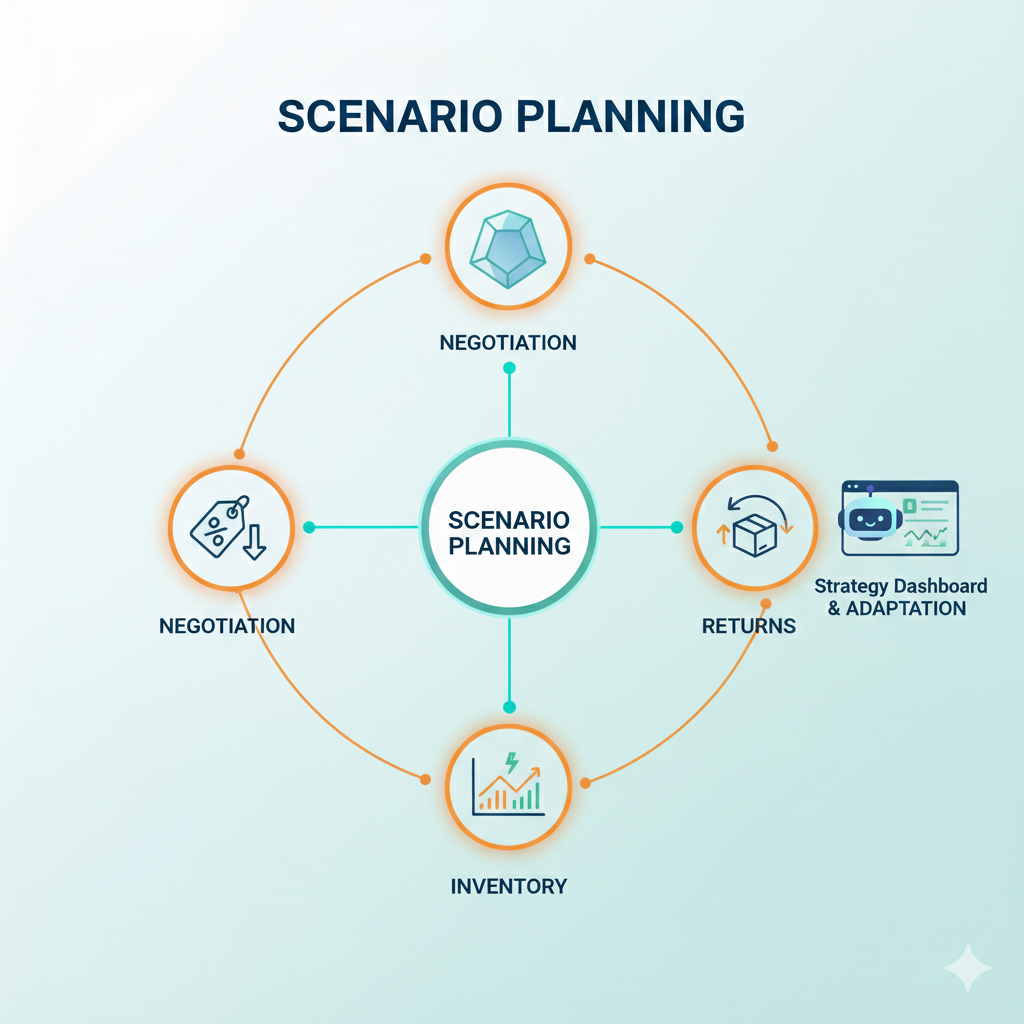
Business Agents can even generate real-time offers based on user intent, turning pricing into a dynamic, negotiable element.
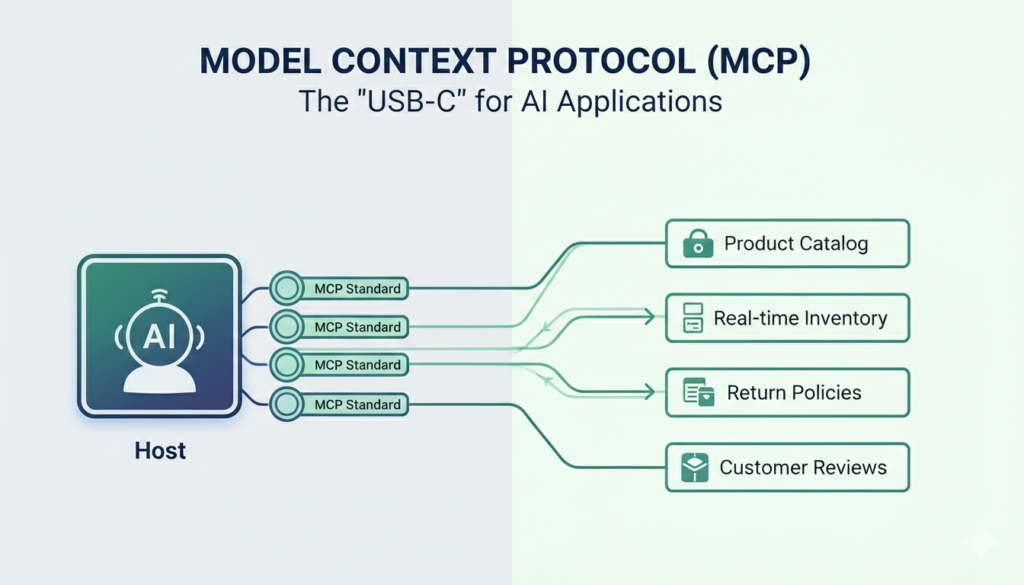
Underpinning both protocols is the Model Context Protocol (MCP) – a standardized way for websites to securely expose structured data (like product details and return policies) to AI agents, replacing fragile scraping methods.
In short: the infrastructure for agent-to-agent commerce is already in place. Websites remain important, but they are no longer the default place where buying decisions happen.
The questions, then, are:
- What does this actually mean for businesses and the trajectory of agents?
- What does it do to SEO – especially ecommerce SEO?
- And what should ecommerce brands be doing now to prepare?
Let’s take those in turn.
1. What this all means for businesses: the trajectory of agents
Business Agents: Your new digital storefront
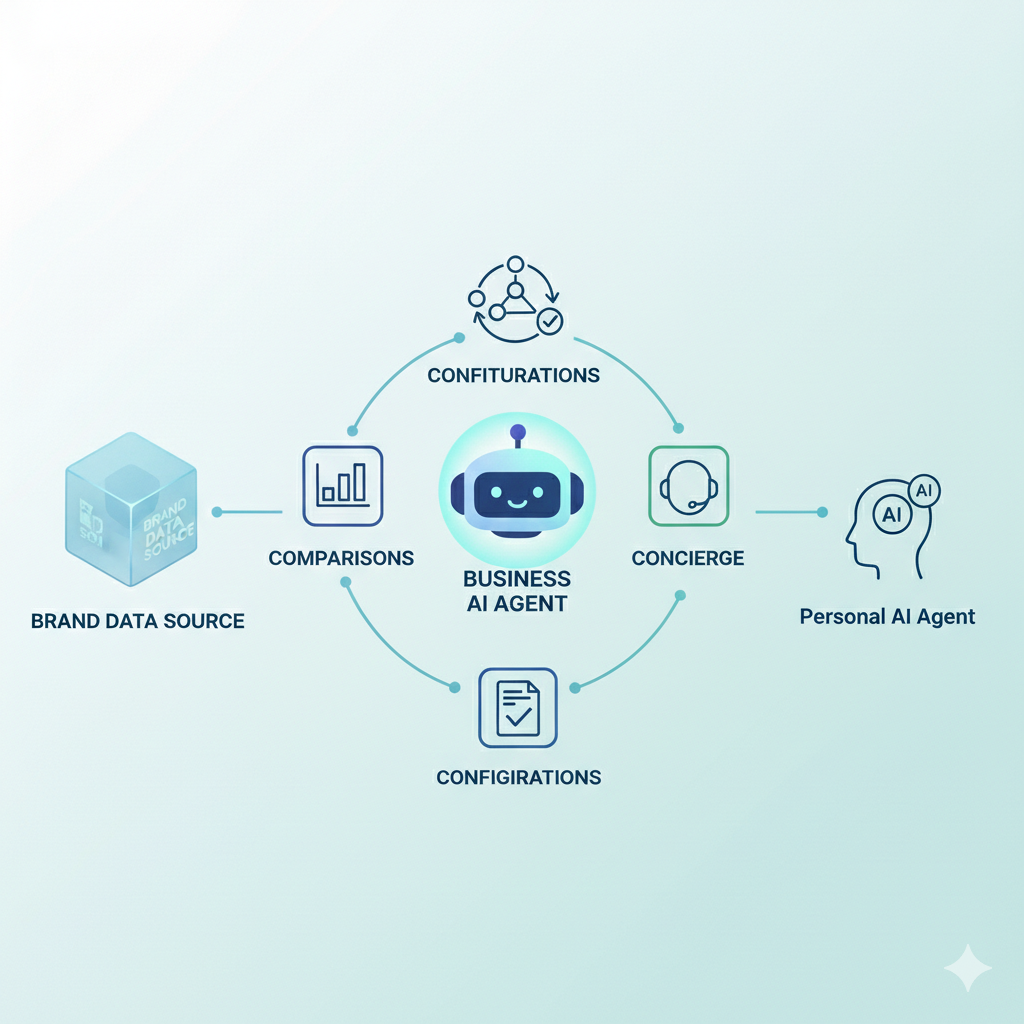
Business Agents act as branded AI staff on neutral surfaces such as Google Search, Gemini, and ChatGPT. They use your Merchant Center data, website content, and commerce protocols to answer questions, guide purchases, and drive checkout 24 hours a day, seven days a week.
They can advise on products and compare options, guide configuration, bundles, and financing, and support post-purchase needs like returns, warranty extensions, and reorders.
Over the next few years, expect expansion to other marketplaces and assistants, greater brand control over tone of voice, discounts, inventory logic, and compliance, and agent marketplaces where merchant performance affects visibility and conversions.
Personal Agents represent the buyer, storing preferences, payment credentials, and recurring tasks. They can automatically reorder products, optimize subscriptions, and operate across multiple AI platforms and devices while communicating with any compatible Business Agent through open protocols.
Strategic implications for businesses
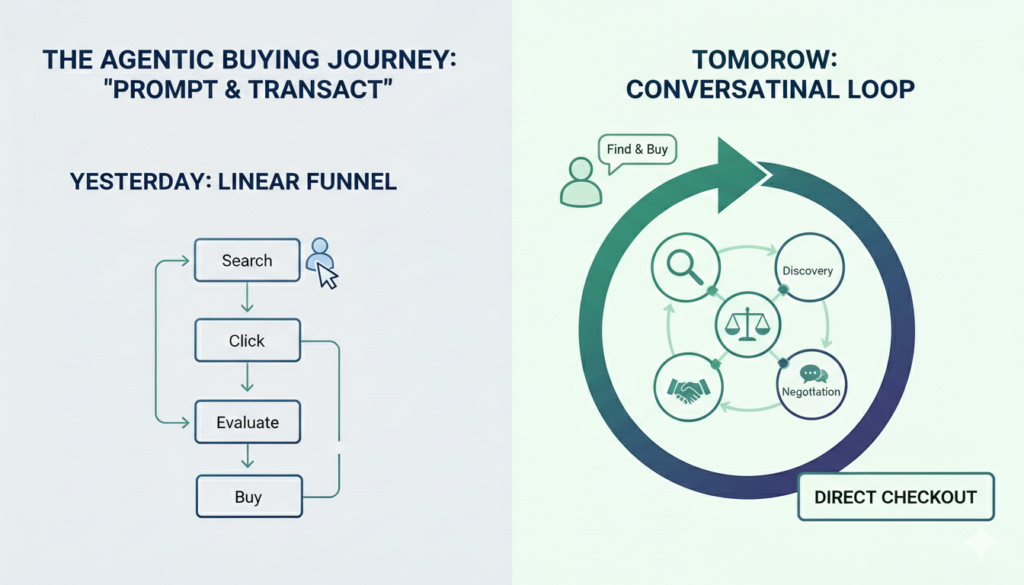
- Compressed buying journey – discovery, evaluation, and checkout can happen in one conversation.
- Shifted control – you do not control the surface where decisions are made, but you remain the merchant of record.
- Execution matters – stock accuracy, fulfillment, and support quality become key signals, because agents optimize for reliability and trust.
2. What this means for SEO (especially e-commerce)
SEO was never just about keywords. It was about showing up, being understood, and getting chosen when someone wants to get something done. Agentic commerce doesn’t replace SEO; it changes what SEO is for.
In AI-driven shopping, agents handle multi-step tasks and clarify ambiguous intent. Customers no longer search for “best running shoes for flat feet.” Instead, agents guide them through conversations, narrowing options, checking stock, and even completing purchases.
For SEO, the goal shifts from ranking pages to making your brand:
- Eligible for the agent’s candidate set
- Understood with accurate, structured data
- Trusted with strong reviews, clear policies, and reliable operations
- Chosen through compelling offers and effective agent performance
New ranking factors include:
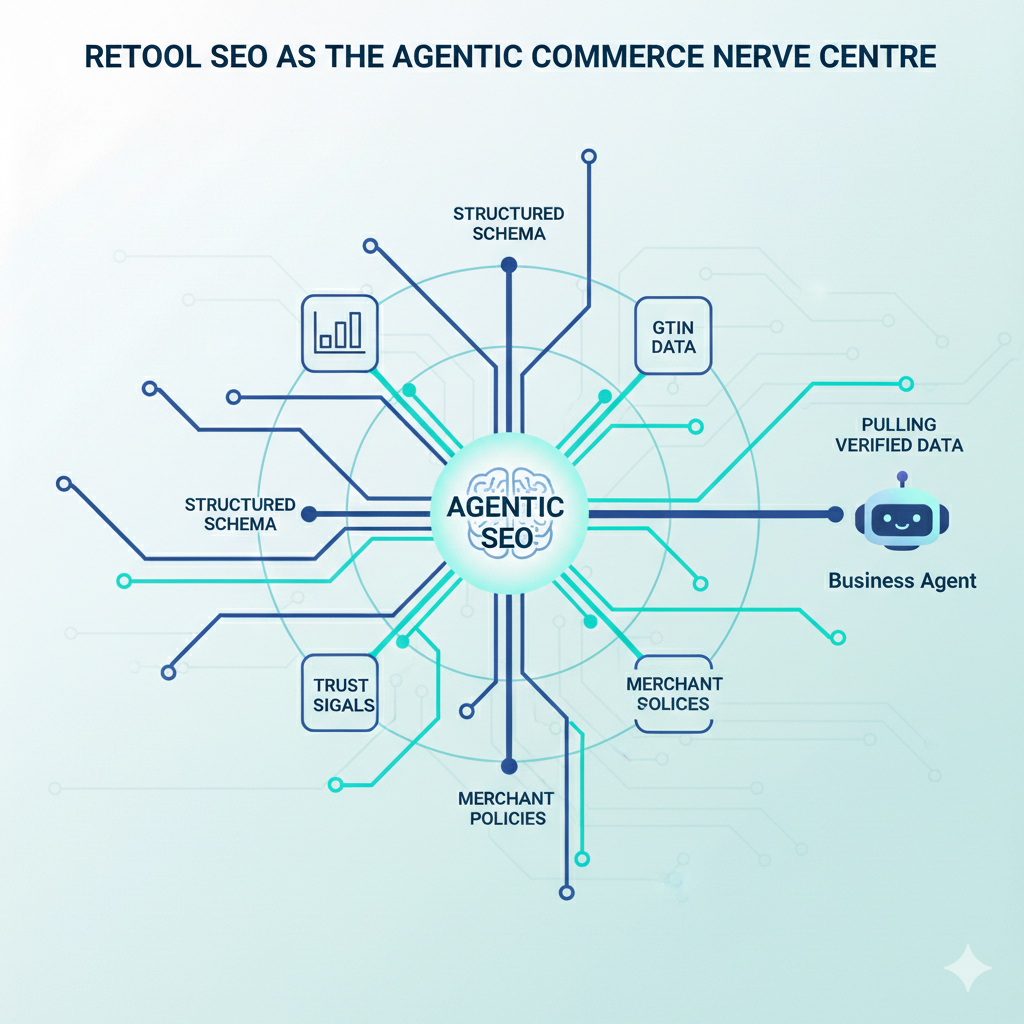
- Protocol and feed eligibility – implement ACP or UCP, keep product feeds complete, consistent, and up to date.
- Structured knowledge and policies – make shipping, returns, warranties, sizing, and ingredients machine-readable.
- Trust and performance signals – reviews, customer service metrics, stock accuracy, and fulfillment speed.
- Agent performance – how often your Business Agent converts conversations to orders, handles questions, and resolves issues.
SEO’s role expands from page optimization to commerce graph optimization across AI surfaces, including:
- Web search
- AI assistants like ChatGPT and Gemini
- Marketplaces such as Amazon and Walmart
Practically, SEOs become schema and protocol leads, conversation strategists, and measurement translators, shaping how agents interact with your brand and reporting on AI-driven visibility and conversions.
The businesses that get this right will move beyond the old “SEO versus PPC” debate and instead focus on eligibility and performance across all AI surfaces.
3. What ecommerce businesses need to do now
You do not need a long roadmap. Focus on a few practical, high-impact steps.
1. Get on the rails
 |
|
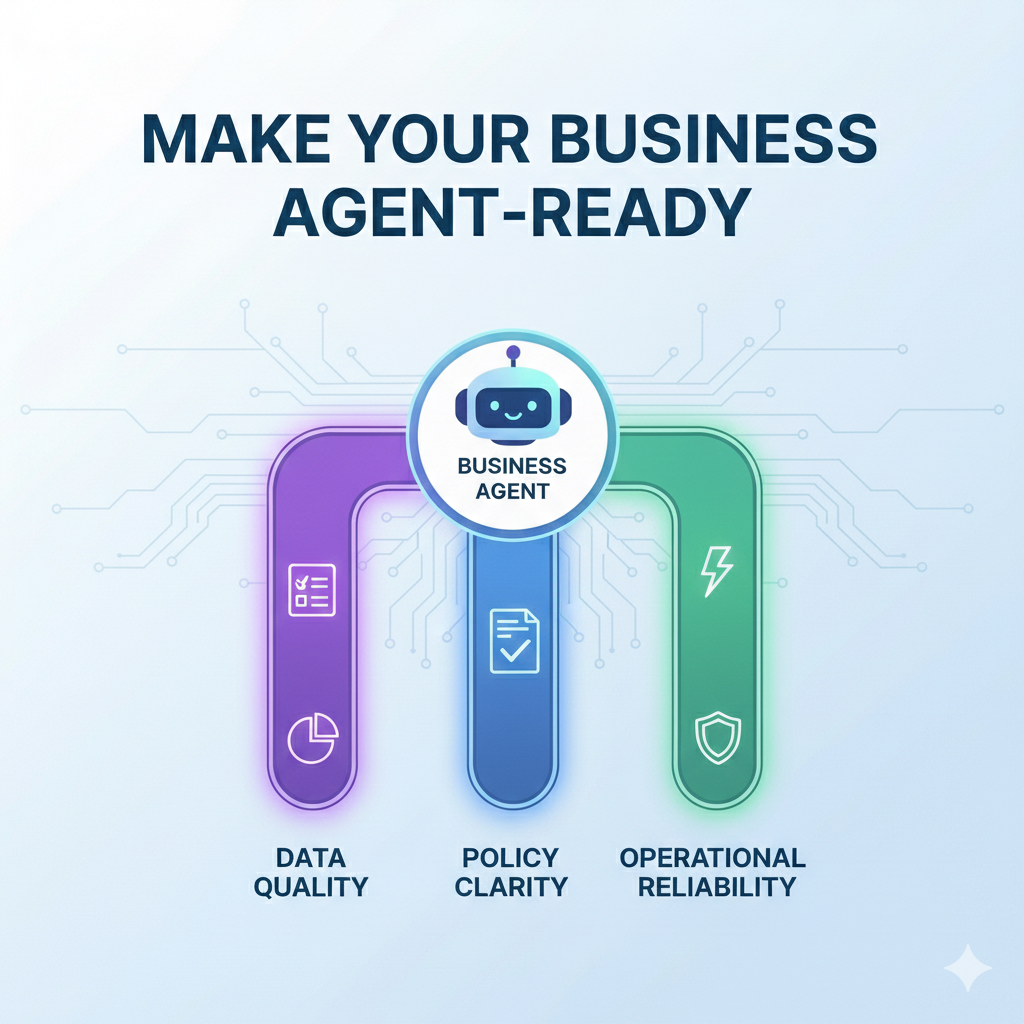
2. Make your business agent-ready
 |
|
3. Build a first-generation Business Agent
 |
|
4. Re-tool SEO for agentic commerce
 |
|
5. Scenario-plan for the future
 |
|
Conclusion: The post-website Era
The transition to Agentic Commerce is not merely a new channel; it is a change in the fundamental physics of commerce. For two decades, the primary constraint on digital commerce was human attention. In the agentic era, the constraint is machine trust.
As transactions move from websites to conversations, and from conversations to background autonomous negotiations, the businesses that thrive will be those that build the most robust, transparent, and standardized Data Infrastructure. The website is no longer the destination; it is the publication layer for the data that feeds the agents.
The trajectory is clear: by late 2026, a brand’s most valuable customer will likely not be a human, but an AI agent executing a “Buy” command on a human’s behalf. The businesses that prepare their protocols, data schemas, and pricing strategies for this Machine Customer today will define the market of tomorrow. The era of “Search and Click” is over; the era of “Prompt and Transact” has begun.
So, what do we need to do now?
In short:
- Get onto the new commerce rails (ACP, UCP) early.
- For a business to be truly “Agent-Ready” in 2026, implementing an MCP server is arguably more important than optimising a mobile site.
- Treat Business Agents as the next generation of “front-of-house”, not a bolt-on chatbot.
- Evolve SEO from “rank pages” to “optimise the entire commerce graph for agents and conversations”.
- Use this moment to clean your data, tighten your operations and make your brand’s value proposition machine-legible.
- Schema is no longer an option as agents will rely on structured data to verify claims. For example, if a product page says “sustainable” in text but lacks the corresponding GS1 sustainability certification in the schema, the agent will likely discard the claim as unverified ‘marketing fluff’.
- A critical “Trust Signal” for agents is the machine-readability of the return policy. Agents look for the
MerchantReturnPolicyschema. If this is missing or ambiguous, the agent – programmed to minimize risk – will disqualify the vendor from the consideration set.
The brands that do this first won’t just survive the shift from websites to agents; they’ll be the ones the agents keep picking, again and again, when it really matters – at the moment of decision.
There is obviously a lot more that can be done right now. We’ll be covering this off in our upcoming webinars, simply because the pace of change is happening so quickly.
At Pi, we provide expert strategic guidance on Agentic Commerce and how to maximize value utilizing the Pi platform.
Our team works with brands on agentic search optimization, helping businesses prepare their data, protocols, and AI visibility so agents can discover, understand, and recommend their products.

Never miss a post
Join our mailing list and have our SEO news delivered straight to your inbox.