AI Shopping Tracker
Follow the conversation to the buying decision
When shoppers ask AI what to buy and where to buy it, see whether your products appear, which sellers are recommended, and where competitors take your place.
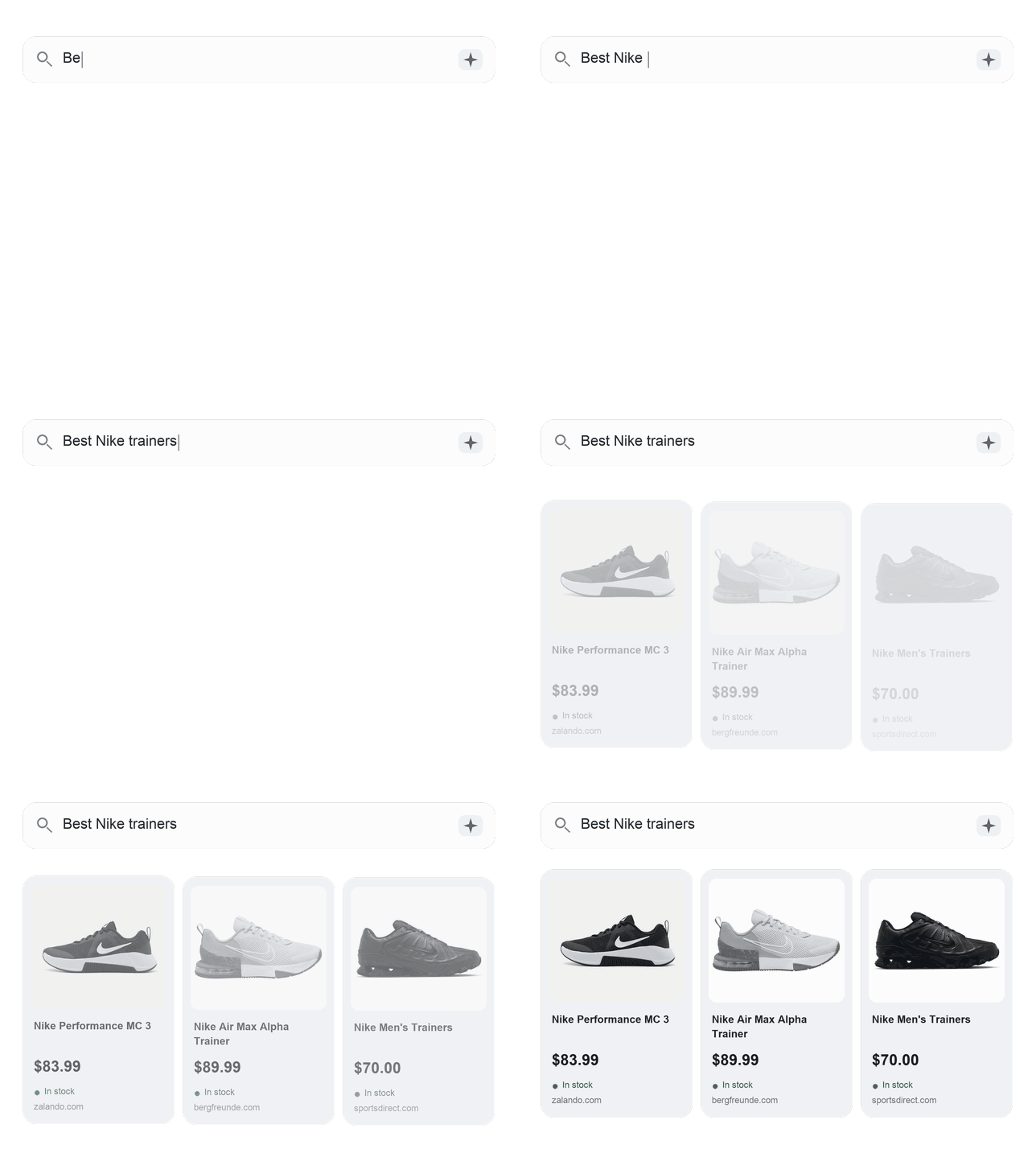
When shopping becomes a conversation, are your products recommended?
Shoppers can ask AI for advice, compare products through follow-up questions, and then look for a place to buy. A brand mention, a citation to your website, a product listing, and a seller recommendation each play a different role in that journey.
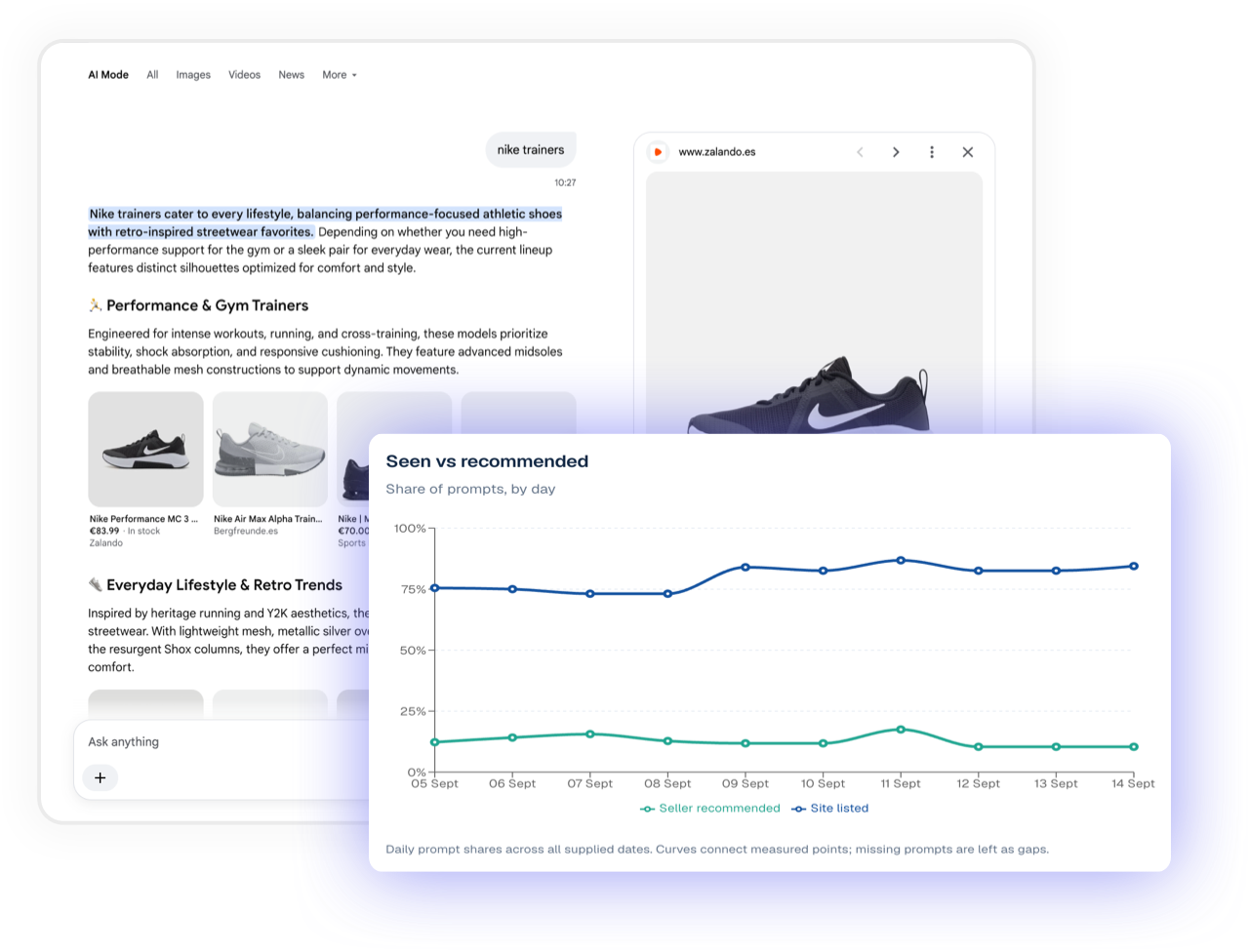
Your product might appear while another retailer is recommended as the seller. Or your website might be cited without your product making the shortlist. Pi helps you see these differences so you can understand what happens when a shopping conversation moves closer to purchase.
See which products make the shortlist and which sellers get recommended
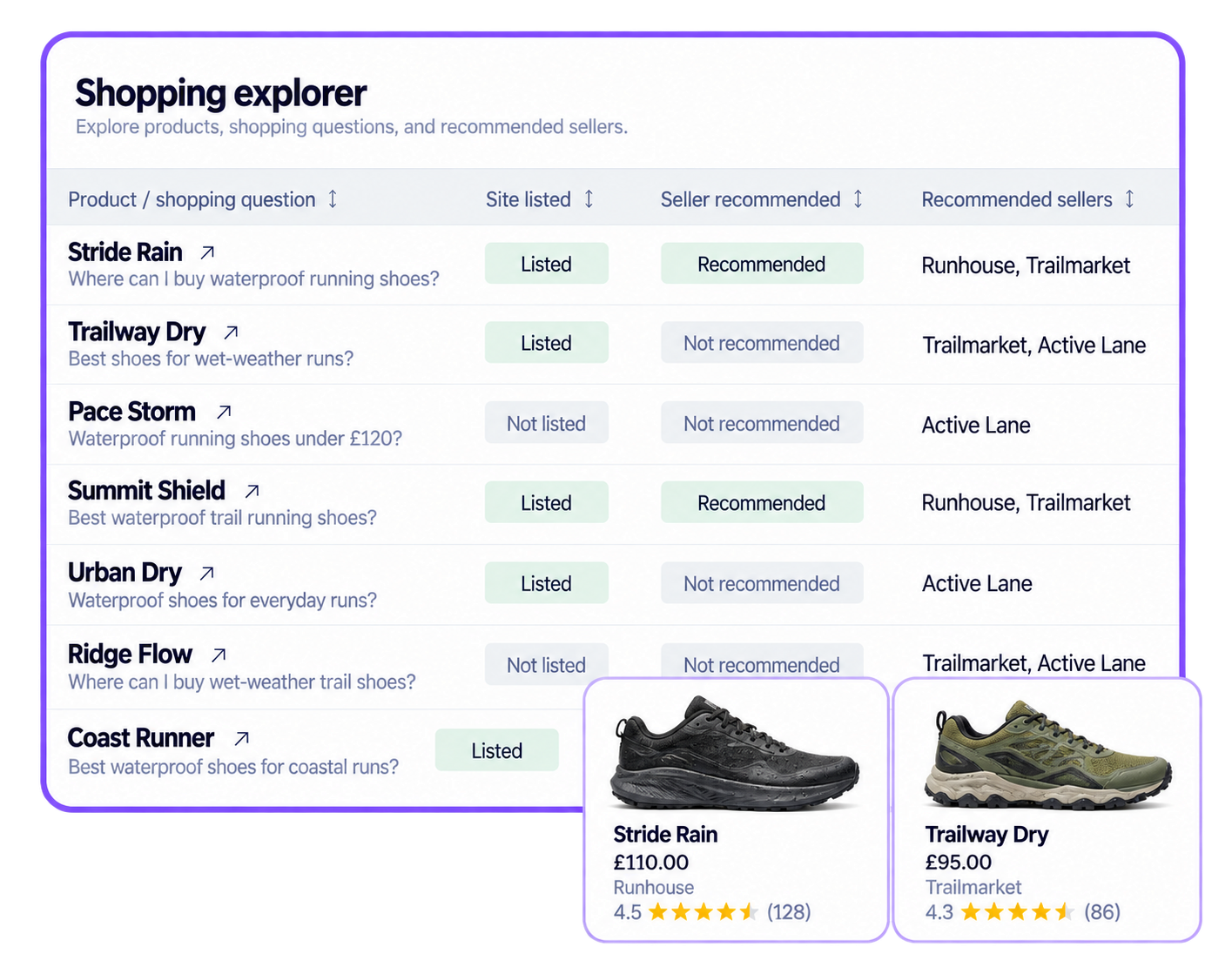
Pi shows the difference between appearing in a shopping result, being cited as a source, and being recommended as the seller. Track these outcomes over time, see which retailers compete for the recommendation, and compare your prices with those shown in AI results.
Explore the categories and products behind the numbers. See the shopping questions that bring them into the conversation and which sellers AI recommends in response.
Be part of the buying decision
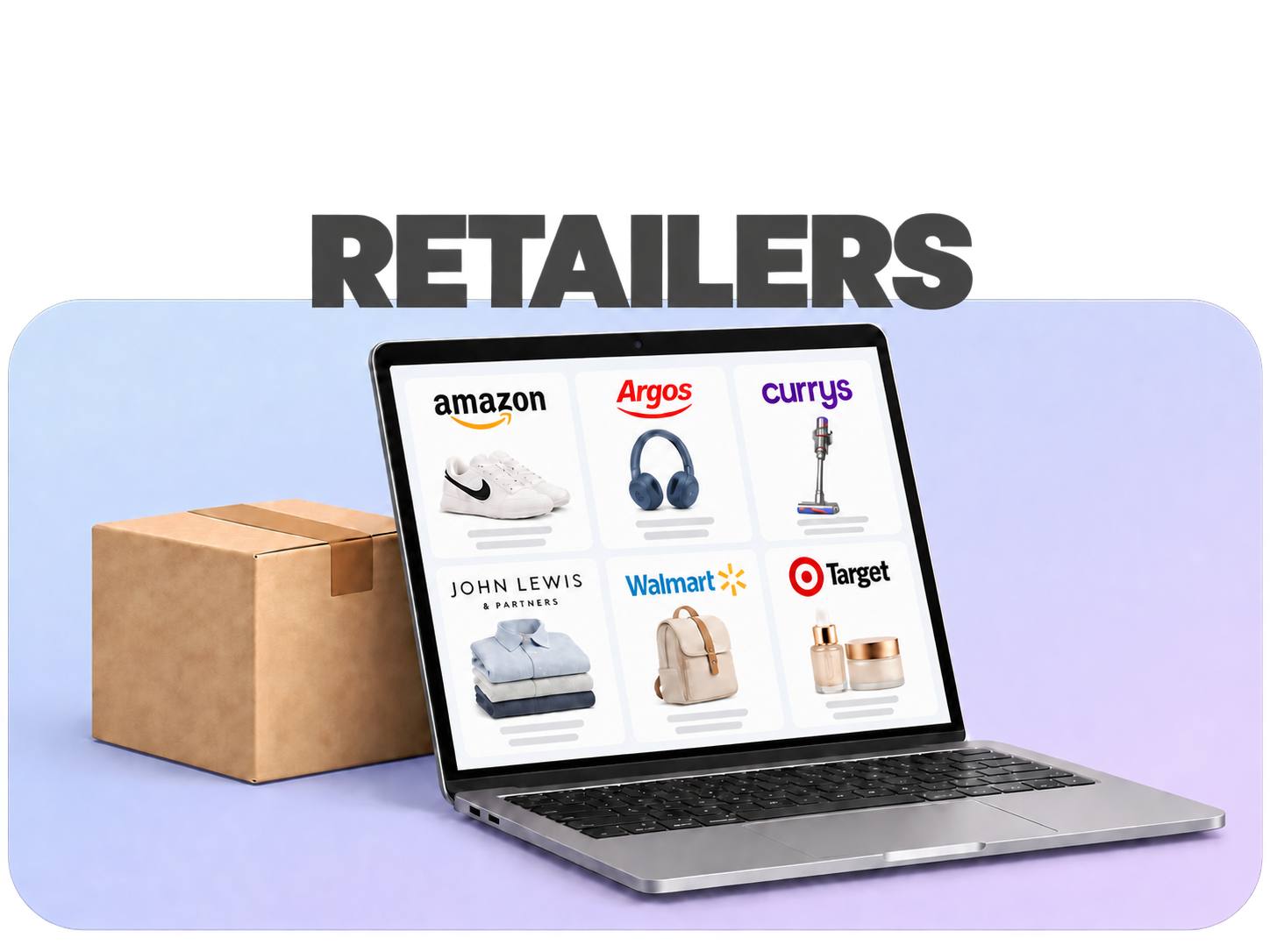
Are you the recommended seller?
When shoppers ask AI what to buy, are they directed to you or another retailer? See which products appear in shopping results, where your website is linked, and who AI recommends buying from.
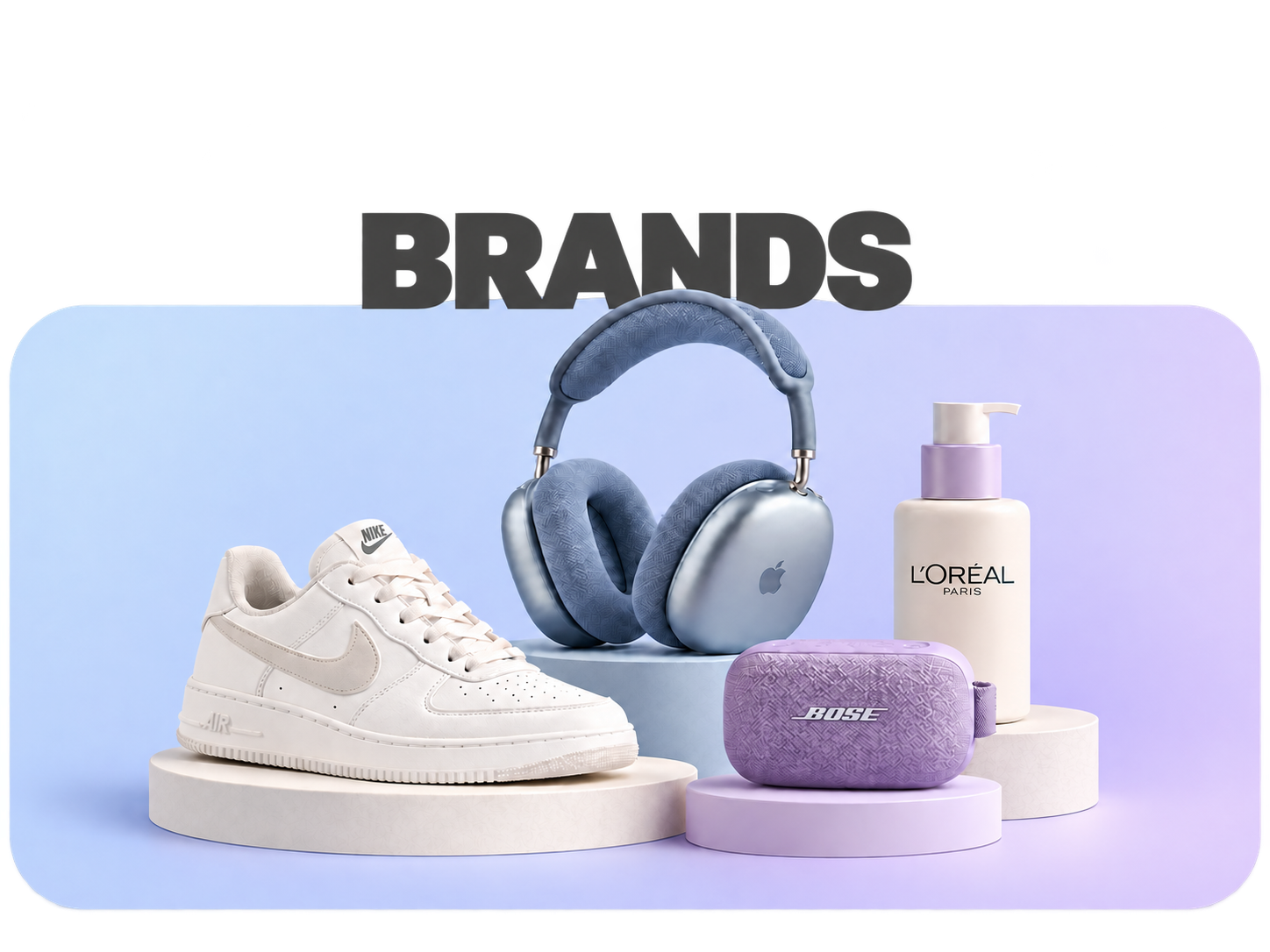
Are your products on the shortlist?
When shoppers ask AI what to buy, are your products recommended or a competitor’s? See which products appear, which retailers shoppers are directed to, and how AI describes your brand and products.
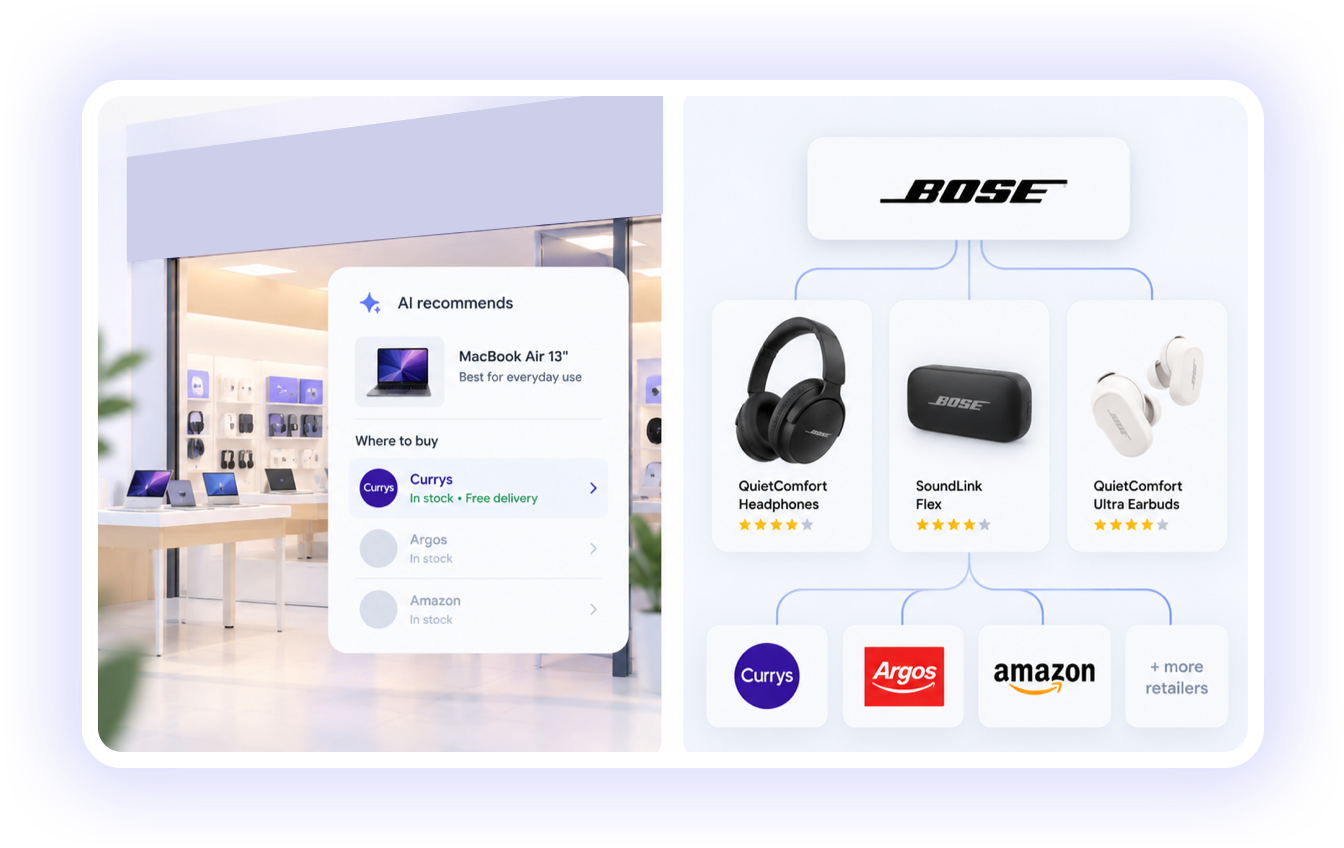
Prepare for agentic commerce
When AI helps shoppers decide what to buy and where to buy it, product visibility and seller visibility both matter. Pi’s AI Shopping Tracker shows whether your products make the shortlist and whether your store is recommended. Use that baseline to see where you’re visible today and where shoppers are being directed to competitors.
Our guide to agentic commerce explains how to prepare your product data, content, and policies for AI-assisted shopping. If you’d like hands-on support, our Agentic Search Optimization Services can help you identify gaps, decide what to update first, and strengthen the product information and content that AI uses to make recommendations.

How a luxury fashion retailer measured its AI shopping visibility
A luxury fashion retailer used Pi to see how it appeared across AI shopping conversations. 86% of tracked prompts triggered a product feature, and 30% included the retailer through a citation, a mention, or ownership of a feature. That gave the team a baseline for identifying gaps and tracking changes over time.
If you’d like help turning your own findings into a plan, our Agentic AI Search Services can help you decide what to improve first across your product data, content, and policies.
FAQs
An AI shopping tracker measures which products, brands, and sellers appear when AI responds to shopping questions. Pi shows product listings, website citations, seller recommendations, competing results, and the queries behind them.
A product listing shows an item within an AI shopping result. A seller recommendation identifies where a shopper could buy it. Your product may appear without your store being recommended, so Pi measures the two outcomes separately.
Yes. Explore results by product, brand, category, and query, including competing sellers and available price comparisons.
Both. Retailers can measure whether they are recommended as the seller for products they stock. Brands can see whether their products appear and which retailers AI recommends for them.
See the complete conversation
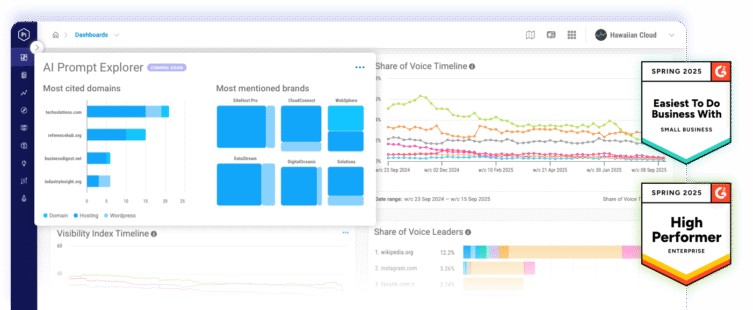
Buying decisions are one part of a wider customer journey. Pi’s AI Search Visibility platform shows where your brand enters the conversation, which sources shape AI answers, and where competitors appear before shoppers reach a product decision.